Application-focused colored surfacing systems engineered to improve skid resistance, traffic guidance and long-term durability across roads, bridges and public infrastructure.
Solution article
Key Benefits of High‑Friction Colored Pavement for Urban Overpass Ramps
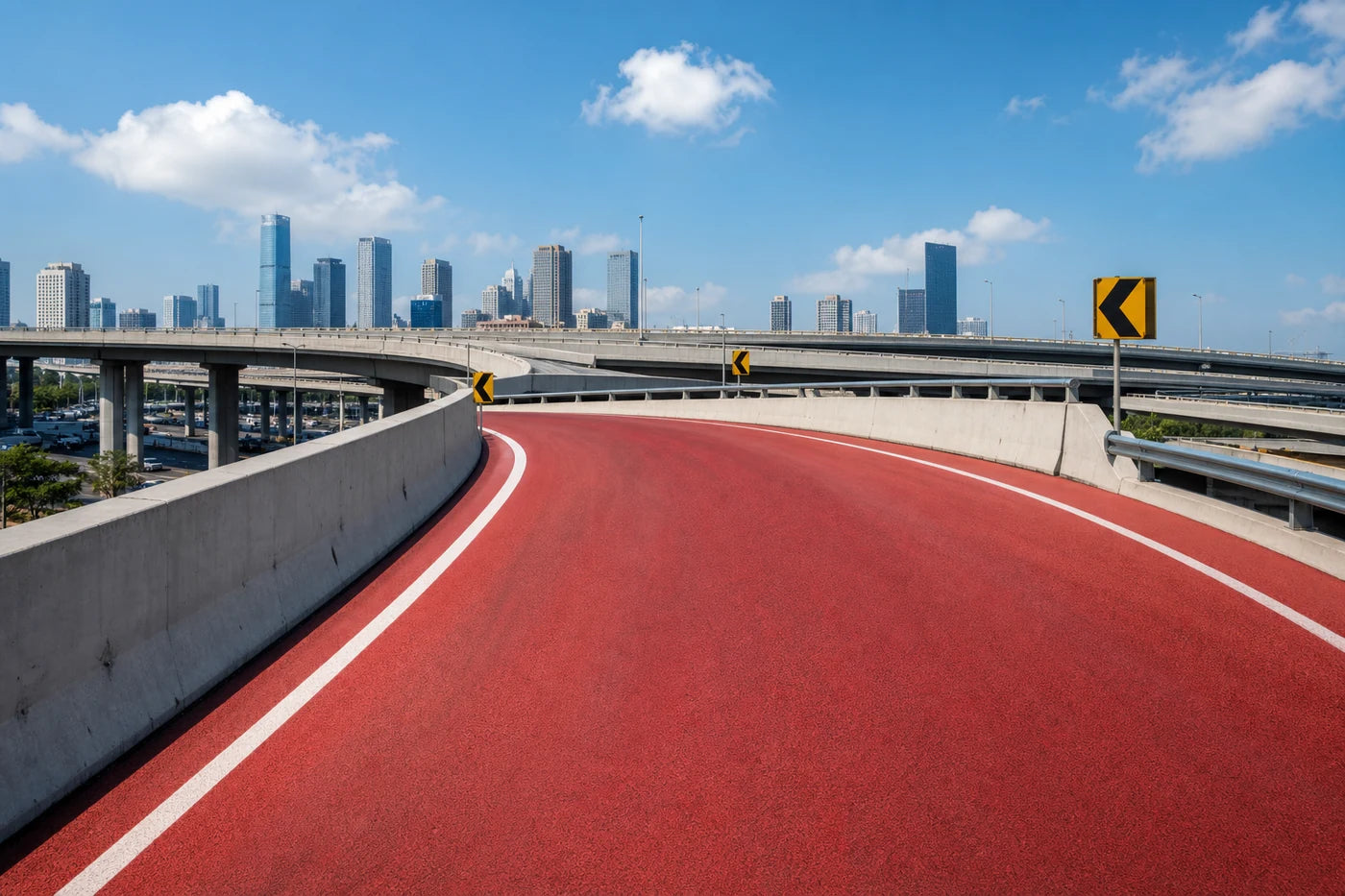
Curved urban overpass ramps carry high skidding risks. High‑friction colored pavement delivers reliable wet‑surface anti‑slip performance and visual warning. It adapts to bridge deck deformation, supports cold‑applied construction, reduces traffic accidents and eases maintenance burdens for municipal viaduct projects.
admin
Urban overpass ramps, especially curved sections, belong to typical high‑risk road zones. Vehicles are required to complete steering, deceleration and lane changing on elevated structures. In rainy or snowy weather, conventional asphalt surfaces easily turn slippery. Once skidding occurs, it may trigger severe traffic accidents on overpasses. High‑friction colored pavement has become a widely‑adopted safety solution for municipal elevated road reconstruction projects.
This functional pavement material is composed of polymer binder and hard wear‑resistant aggregates. After construction, it forms a coarse textured surface on the original road substrate. It maintains stable friction coefficient under both dry and wet conditions, effectively shortening braking distance for turning vehicles. The striking red color delivers obvious visual reminders, guiding drivers to slow down in advance when approaching curved ramps.
High‑friction colored pavement brings multiple practical benefits for overpass ramp projects. It features excellent bonding strength, adapting to the slight deformation of bridge decks. It resists ultraviolet aging and large temperature differences, avoiding peeling, cracking and aggregate shedding under long‑term vehicle loads. Most products adopt cold‑applied construction, which avoids large‑scale road demolition, shortens on‑site working cycles and reduces traffic disruption on urban viaducts.
In addition to traffic safety improvement, this material reduces later‑stage maintenance pressure for transportation departments. Its superior wear resistance extends the service life of overpass ramp pavements. Distinct colored surfaces also help drivers identify ramp boundaries quickly, optimizing driving judgment on complicated interchange systems.
To obtain ideal service effect, project teams need to select qualified materials and implement standardized construction processes. Deploying high‑friction colored pavement on urban overpass ramps can significantly lower skidding‑related accident risks and build safer travelling conditions for city viaduct traffic.


 Highways
 Cycle Lanes
 Pedestrian Zones
 Bridges & Tunnels
 Parking
 School Zones
 Industrial
 Recreation