Application-focused colored surfacing systems engineered to improve skid resistance, traffic guidance and long-term durability across roads, bridges and public infrastructure.
Solution article
Application and Benefits of Colored Road Pavement at Urban Cross‑Roads
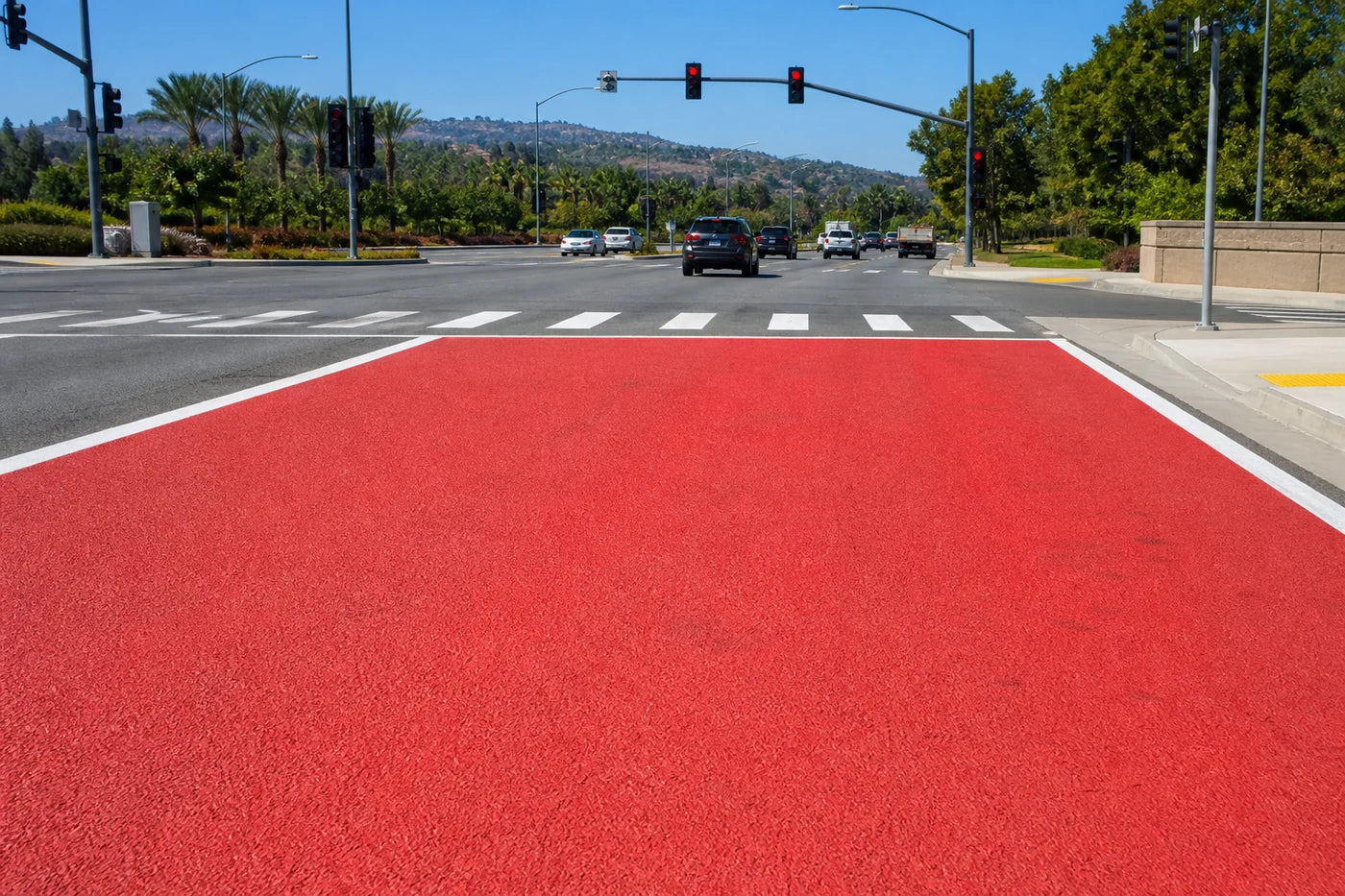
Colored road pavement is widely used at urban cross‑roads. It offers reliable anti‑slip performance and striking visual warning effects. With cold‑applied construction and good wear resistance, it regulates traffic flow, lowers accident risks and reduces municipal road maintenance expenses.
admin
Urban cross‑roads are core traffic nodes with frequent vehicle starts‑stops, turns and pedestrian‑vehicle interactions. Mixed traffic flow brings high risks of traffic conflicts and skidding accidents. Traditional black‑and‑grey asphalt pavements provide limited visual guidance for drivers. Colored road pavement, as an advanced traffic safety material, is widely applied at urban intersections to improve road safety and traffic order.
Colored road pavement adopts polymer binders compounded with high‑friction aggregates. It can be laid directly on existing asphalt or concrete substrates without large‑scale road reconstruction. Different bright colors form obvious visual zones, reminding drivers to slow down in advance, watch out for pedestrians and yield at intersections. For vehicles braking on rainy wet surfaces, its rough textured surface maintains stable friction, shortens braking distance and effectively reduces skidding risks.
Besides safety promotion, colored pavement brings multiple practical advantages for urban traffic projects. It delivers outstanding wear resistance to cope with long‑time impact from frequent vehicle braking and turning. Excellent adhesive performance prevents peeling and cracking under temperature changes. Most products support cold‑applied construction, greatly shortening construction periods and minimizing disturbance to urban traffic.
Colored road pavement also plays an important role in traffic organization. Distinct colors can divide motor‑vehicle lanes, non‑motor‑vehicle lanes and pedestrian waiting areas, clarifying road right‑of‑way. It helps standardize driving routes and reduces wrong‑way driving and lane‑changing chaos. Meanwhile, it features good weather resistance and low‑cost maintenance, lowering long‑term renovation investment for municipal authorities.
When implementing intersection renovation projects, contractors shall select qualified colored pavement materials and follow standardized construction specifications. Reasonable layout of colored pavement can cut accident rates significantly, optimize urban traffic environment and create safer travel conditions for both drivers and pedestrians.


 Highways
 Cycle Lanes
 Pedestrian Zones
 Bridges & Tunnels
 Parking
 School Zones
 Industrial
 Recreation