Application-focused colored surfacing systems engineered to improve skid resistance, traffic guidance and long-term durability across roads, bridges and public infrastructure.
Solution article
Heavy-Duty High-Friction Surfacing for Port Container Traffic
Heavy-duty high-friction surfacing for port container traffic provides durable traction, wear resistance, and clear traffic-zone identification for container trucks and heavy handling equipment operating in demanding port terminals and logistics areas.
admin
Heavy-Duty High-Friction Surfacing for Port Container Traffic
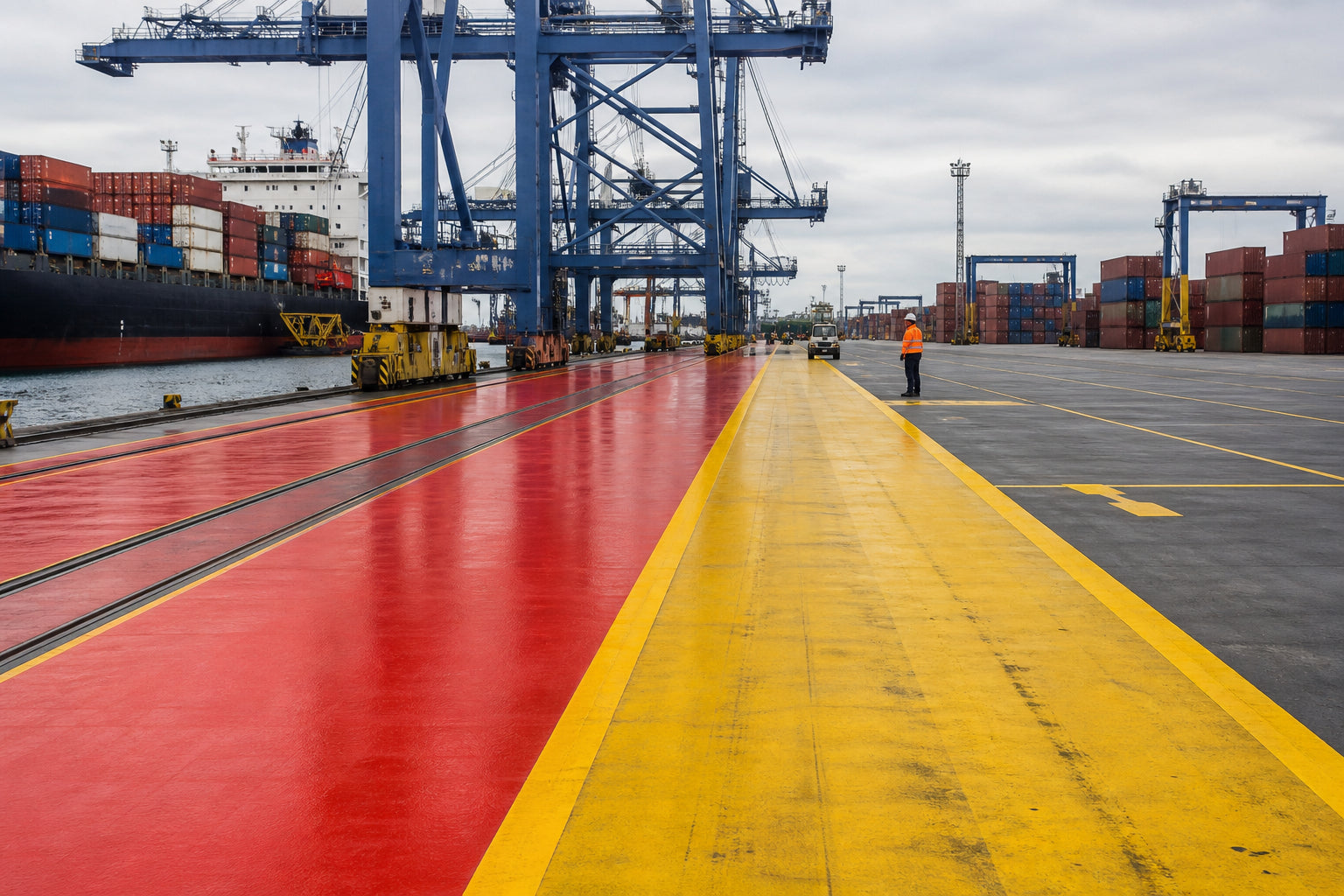
Port container terminals are among the most demanding traffic environments in modern logistics. Container trucks, terminal tractors, reach stackers, forklifts, and other heavy handling equipment operate continuously across loading zones, transfer routes, and storage yards. These areas require pavement surfaces that can withstand heavy loads, frequent braking, sharp turning, and intensive daily traffic. Heavy-duty high-friction surfacing for port container traffic provides a durable solution that improves traction, enhances traffic-zone visibility, and helps protect pavement in critical operational areas.
High-Friction Performance for Heavy Port Traffic
Container terminals experience constant movement of heavy vehicles and cargo-handling equipment. Repeated acceleration, braking, and turning can place significant stress on conventional asphalt and concrete surfaces, particularly at intersections, curves, loading points, and terminal entrances.
High-friction surfacing creates a textured surface with increased grip between vehicle tires and the pavement. A typical system combines a durable resin binder with selected wear-resistant aggregates to provide strong adhesion and a rough, skid-resistant finish.
This additional traction is particularly valuable in areas where container trucks and handling equipment frequently stop, turn, or change direction.
Designed for Demanding Container Operations
Port pavement must perform under heavy axle loads and continuous mechanical wear. Reach stackers, terminal tractors, container handlers, and loaded trucks can generate substantial surface stress during normal operations.
Heavy-duty surfacing systems are designed to provide improved abrasion resistance and long-term surface protection. When properly selected and installed, the system creates a durable wearing layer over suitable concrete or asphalt substrates.
Material selection should consider traffic volume, vehicle type, turning frequency, environmental exposure, substrate condition, and expected operational loads.
Colored Surfacing for Traffic Zone Identification
High-friction surfacing can also incorporate color to improve traffic organization within container terminals. Different colors can be used to identify truck routes, equipment lanes, container handling zones, pedestrian areas, warning zones, intersections, and restricted sections.
Colored pavement is particularly useful at conflict points where multiple traffic routes meet. Contrasting surfaces can highlight turning zones, crossings, stop areas, and other locations that require greater driver awareness.
Combining color coding with high-friction texture provides both visual guidance and improved surface traction.
Suitable for Critical Port Areas
Heavy-duty high-friction surfacing can be applied to various locations within ports and logistics terminals, including container truck routes, terminal intersections, loading and unloading zones, port entrance roads, container storage yards, equipment operating areas, ramps, and sharp turning sections.
Areas exposed to frequent braking and turning are particularly suitable because these locations typically experience higher levels of pavement wear and demand reliable tire grip.
Proper substrate preparation is essential before installation. Existing pavement should be evaluated and cleaned to remove loose material, oil, dust, and contaminants that could affect adhesion.
Durable Surfacing for Efficient Port Operations
Heavy-duty high-friction surfacing combines enhanced traction, abrasion resistance, pavement protection, and traffic-zone visibility in a practical surface treatment for busy container terminals.
With appropriate system design, aggregate selection, surface preparation, and installation, high-friction surfacing can provide reliable performance in demanding port environments. It helps create clearly defined traffic areas while supporting the heavy vehicles and intensive movements required for efficient container handling and modern logistics operations.


 Highways
 Cycle Lanes
 Pedestrian Zones
 Bridges & Tunnels
 Parking
 School Zones
 Industrial
 Recreation