Application-focused colored surfacing systems engineered to improve skid resistance, traffic guidance and long-term durability across roads, bridges and public infrastructure.
Solution article
How Does Color-Coded Flooring Improve Chemical Handling Zones?
Color-coded flooring helps improve chemical handling zones by creating clear visual boundaries, providing slip-resistant traction, and distinguishing storage, restricted, pedestrian, and vehicle areas within industrial facilities
admin
How Does Color-Coded Flooring Improve Chemical Handling Zones?
Chemical handling zones are common in manufacturing plants, warehouses, processing facilities, laboratories, and industrial storage areas. These environments may involve the movement, storage, or transfer of chemicals, making clear floor organization especially important. Color-coded flooring for chemical handling zones provides a practical way to identify different operational areas while offering a durable, slip-resistant surface for demanding industrial conditions.
Why Is Color Coding Important in Chemical Handling Areas?
Industrial facilities often contain multiple working zones within the same space. Chemical storage areas may be located close to pedestrian routes, forklift lanes, production equipment, or loading areas. Without clear visual separation, these different areas can be more difficult to identify.
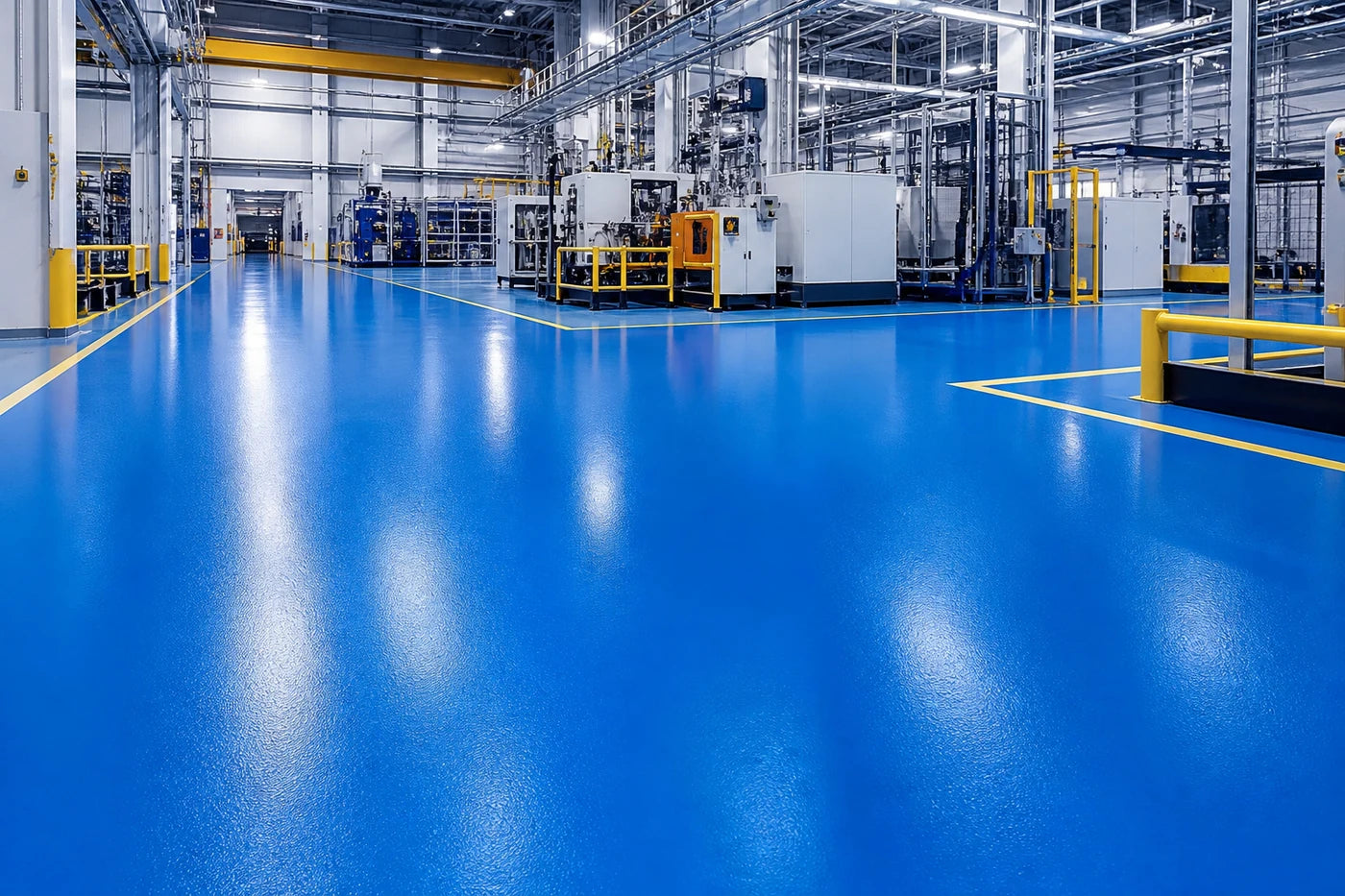
Color-coded flooring creates visible boundaries between functional zones. Different colors can be used to distinguish chemical handling areas, storage zones, pedestrian walkways, forklift routes, restricted areas, and emergency access paths.
Consistent color zoning also helps create a cleaner and more organized facility layout, allowing workers and visitors to recognize designated areas more easily.
How Can Anti-Slip Flooring Improve Surface Traction?
Chemical handling areas may be exposed to water, liquids, dust, and other materials that can affect floor traction. Smooth industrial floors can become more difficult to walk or drive across when surface conditions change.
A color-coded flooring system can incorporate slip-resistant aggregates to create a textured, high-friction finish. This additional texture can improve grip for workers while also providing traction for carts, pallet trucks, forklifts, and other material-handling equipment.
The required surface texture should be selected according to the operating environment and expected traffic conditions.
Can Colored Flooring Help Identify Restricted Zones?
Yes. One of the key advantages of colored safety flooring is its ability to make restricted or controlled areas visually distinct.
For example, contrasting colors can be used around chemical storage locations, transfer stations, processing equipment, or designated handling zones. Floor colors may also be combined with warning markings, boundary lines, directional arrows, pedestrian symbols, and hazard identification signs.
This provides a more comprehensive visual management system than relying on small floor markings alone.
Choosing Flooring for Chemical Environments
Chemical handling environments can present additional challenges beyond normal industrial traffic. Depending on the substances present, flooring may require resistance to particular chemicals, oils, cleaning agents, or other contaminants.
The flooring material should therefore be selected according to the actual chemicals used at the facility, their concentrations, exposure duration, temperature, and cleaning procedures. Not every resin or anti-slip flooring system provides the same level of chemical resistance.
Proper substrate preparation is equally important. Concrete or other suitable surfaces should be cleaned and prepared to remove dust, grease, loose materials, and contaminants before application.
Creating Clearer Chemical Handling Zones
Color-coded flooring can be used in chemical warehouses, manufacturing plants, processing facilities, chemical transfer areas, storage rooms, industrial laboratories, loading areas, and production workshops.
By combining clear visual zoning, anti-slip texture, durable surface protection, and appropriate chemical resistance, color-coded flooring can help create more clearly organized chemical handling environments. When the flooring system is properly matched to site conditions, it provides a practical way to distinguish important operational zones while delivering the durability and traction required for everyday industrial use.


 Highways
 Cycle Lanes
 Pedestrian Zones
 Bridges & Tunnels
 Parking
 School Zones
 Industrial
 Recreation