Application-focused colored surfacing systems engineered to improve skid resistance, traffic guidance and long-term durability across roads, bridges and public infrastructure.
Solution article
Colored Surfacing for Landscape & Public Spaces
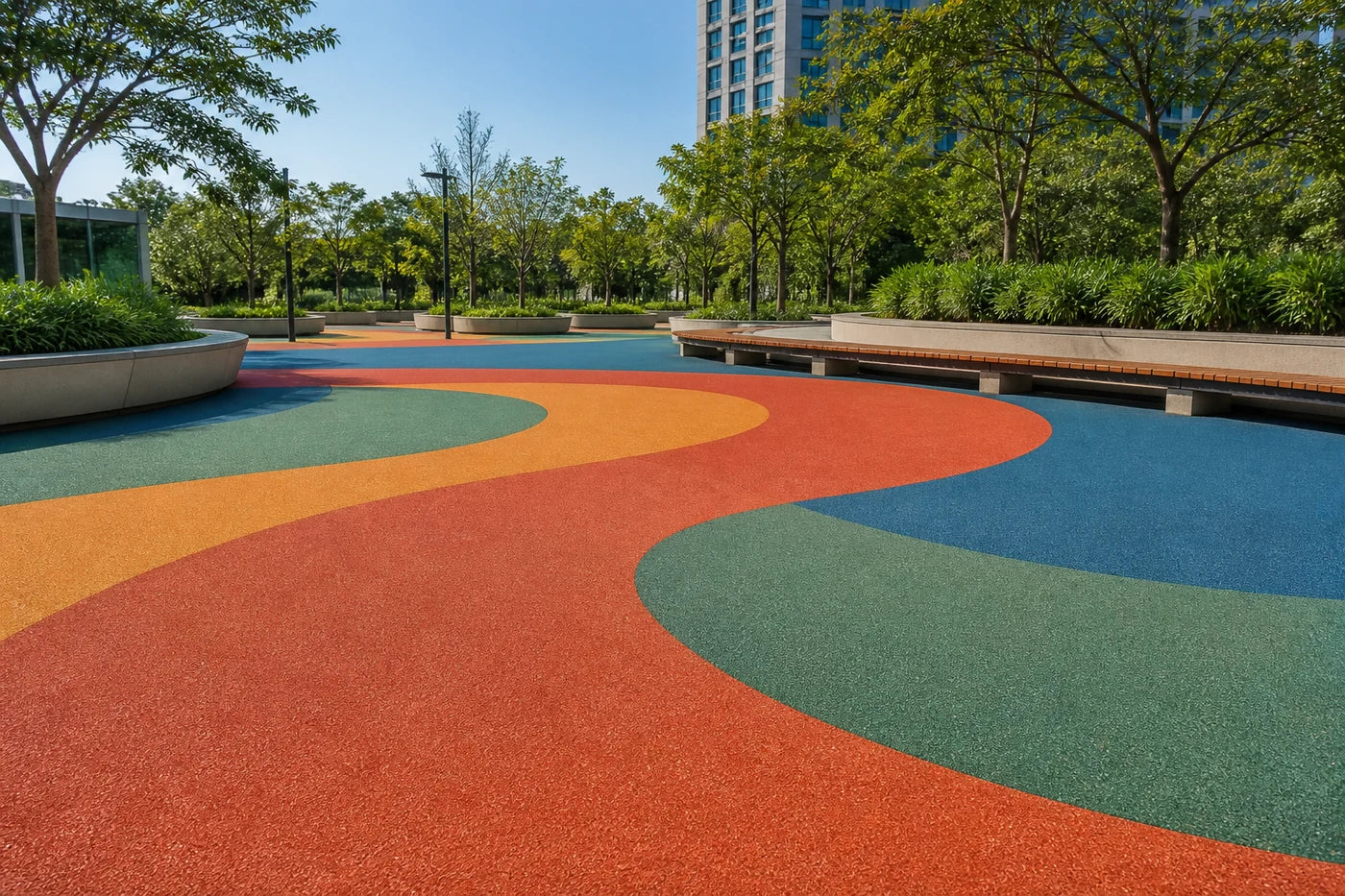
Colored surfacing combines decorative color, anti-slip texture, visual zoning, and durable performance to create attractive and functional landscapes, plazas, parks, waterfronts, walkways, and modern public spaces.
admin
Colored Surfacing for Landscape & Public Spaces
Landscape and public spaces play an important role in modern cities, communities, tourist destinations, and commercial developments. Parks, plazas, pedestrian streets, waterfronts, gardens, and recreational areas need surfaces that are not only durable but also visually attractive and comfortable for everyday use. Colored surfacing for landscape and public spaces combines decorative design, anti-slip performance, and functional zoning to create distinctive outdoor environments.
Bringing More Color to Public Space Design
Traditional concrete and asphalt provide practical pavement solutions, but their limited appearance may not always complement modern landscape design. Colored surfacing allows architects and landscape designers to introduce a wider range of colors, textures, and patterns.
Natural earth tones can blend with gardens and scenic environments, while brighter colors can create visual highlights in contemporary plazas, commercial districts, and recreational spaces.
Colored pavement can also coordinate with surrounding architecture, vegetation, street furniture, public art, and other landscape elements, helping create a more unified visual identity.
Anti-Slip Performance for Pedestrian Areas
Public spaces are exposed to rain, moisture, dust, fallen leaves, and continuous pedestrian traffic. These conditions make surface texture an important consideration, especially around ramps, slopes, entrances, and busy walking routes.
Colored surfacing can incorporate selected anti-slip aggregates to create a textured, high-friction finish. This provides additional grip underfoot while maintaining the decorative appearance of the pavement.
Different textures can be selected according to pedestrian volume, environmental conditions, and the requirements of each project.
Using Color to Define Different Zones
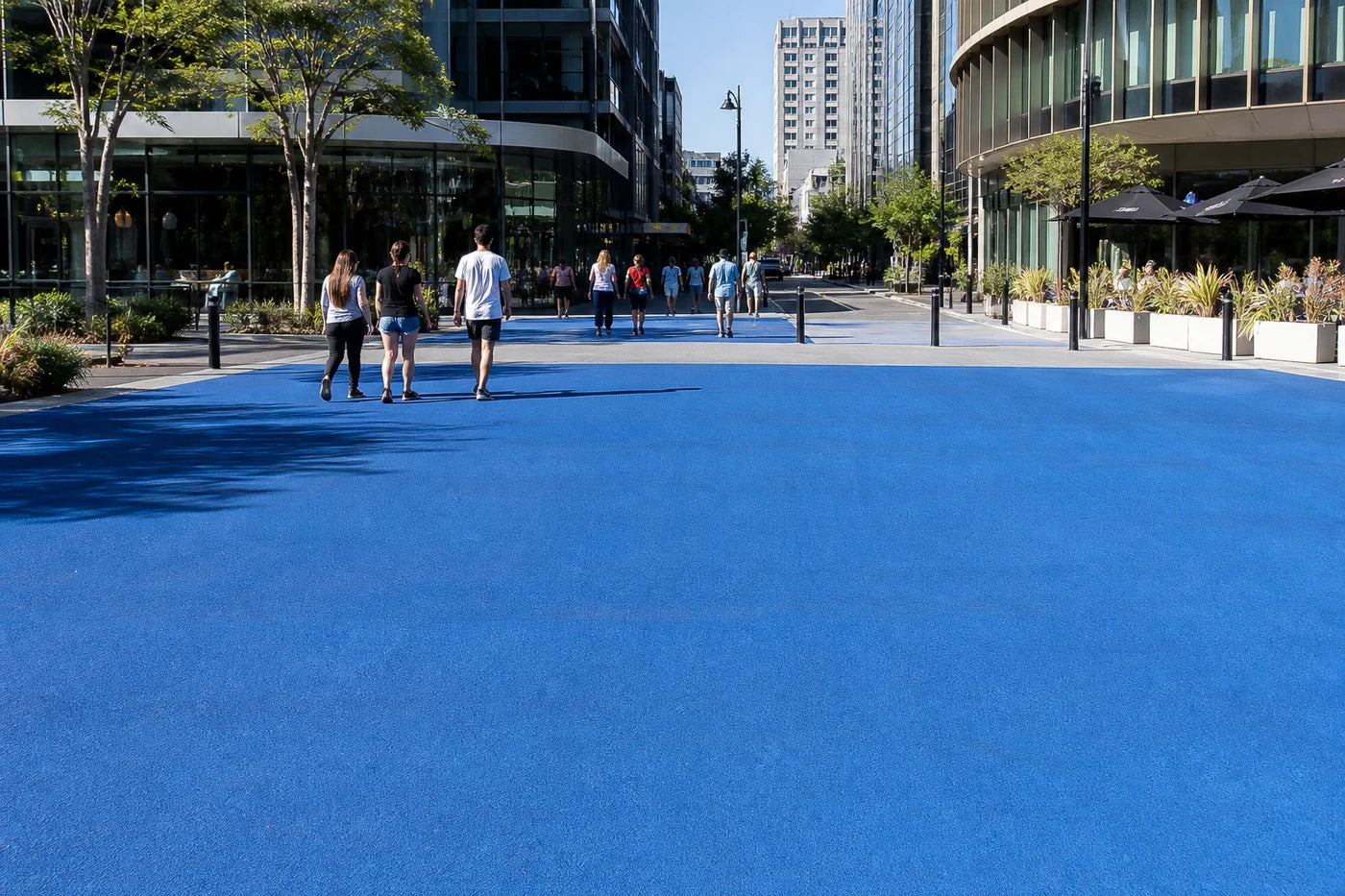
Color is also a useful tool for organizing public spaces. Different pavement colors can visually separate pedestrian routes, bicycle lanes, gathering areas, recreational zones, viewing spaces, entrances, and shared-use paths.
A continuous colored route can provide intuitive wayfinding, while contrasting pavement can highlight intersections or important destinations. Decorative patterns and colored borders can further define individual spaces without relying entirely on signs or physical barriers.
This combination of design and functionality makes colored surfacing especially suitable for complex public environments.
Suitable for Diverse Landscape Applications
Colored surfacing can be used across a wide range of projects, including public plazas, urban parks, garden trails, waterfront promenades, community squares, cultural venues, commercial streets, scenic routes, viewing areas, and recreational spaces.
The surface can be designed to complement different architectural and landscape styles, from natural parks and gardens to contemporary urban developments.
Proper substrate preparation, drainage, material selection, traffic conditions, and environmental exposure should be considered to achieve reliable long-term performance.
Creating Better Outdoor Environments
Colored surfacing provides landscape designers with a flexible way to combine color, texture, anti-slip performance, visual guidance, and durable surface protection.
Whether creating a vibrant urban plaza, a peaceful garden pathway, a scenic waterfront promenade, or a distinctive cultural space, colored surfacing can transform ordinary pavement into an integral part of the landscape.
By balancing practical surface performance with creative design, colored surfacing helps create public spaces that are more attractive, recognizable, and enjoyable for everyday use.


 Highways
 Cycle Lanes
 Pedestrian Zones
 Bridges & Tunnels
 Parking
 School Zones
 Industrial
 Recreation