Application-focused colored surfacing systems engineered to improve skid resistance, traffic guidance and long-term durability across roads, bridges and public infrastructure.
Solution article
Where Design Meets Safety: Colored Surfacing for Cultural Venues
Colored surfacing combines distinctive design, anti-slip performance, and visual wayfinding to create attractive and durable forecourts for museums, theaters, galleries, exhibition centers, and other cultural venues.
admin
Where Design Meets Safety: Colored Surfacing for Cultural Venues
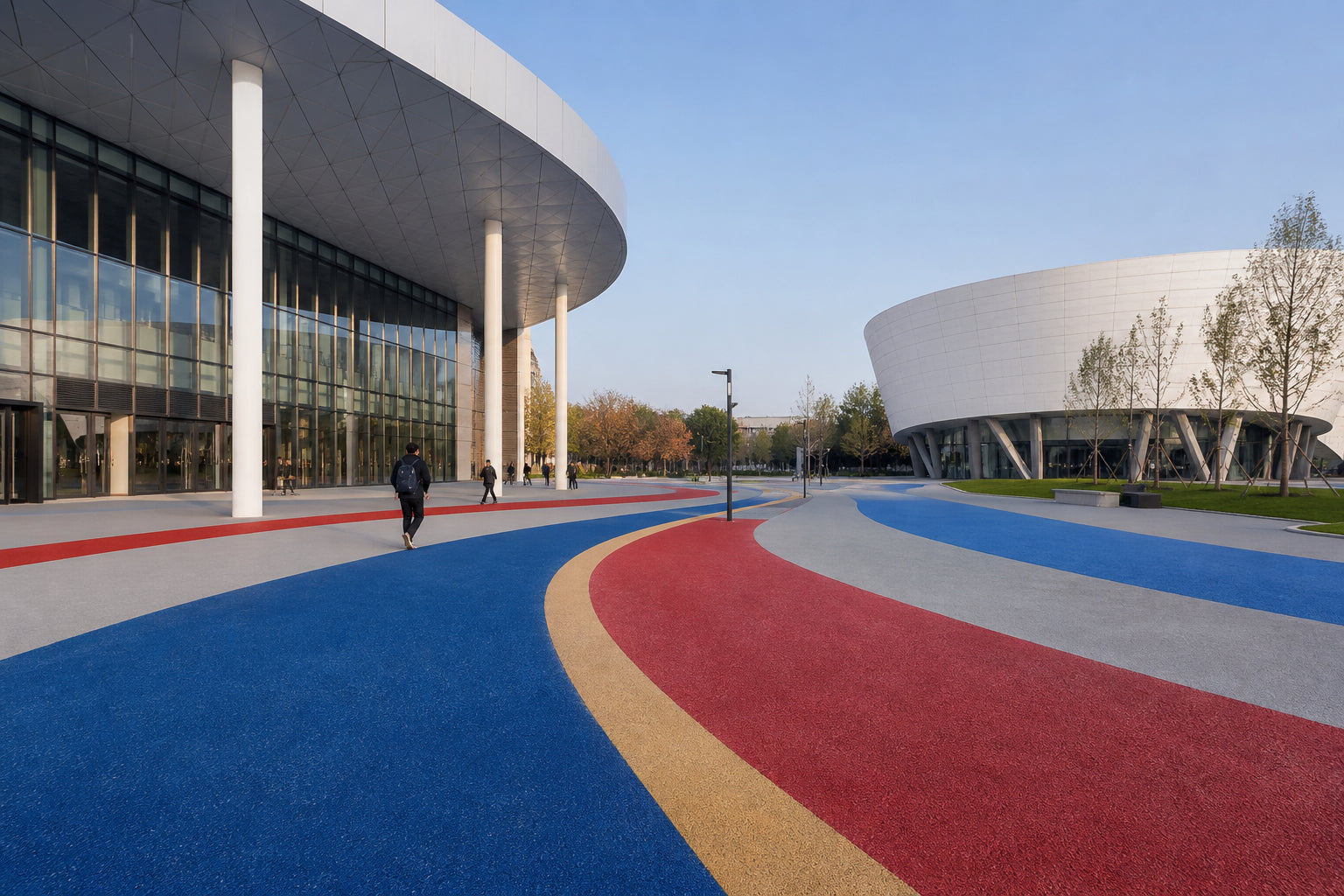
Cultural venues such as museums, art galleries, theaters, exhibition centers, libraries, and performing arts facilities often serve as important public landmarks. The outdoor spaces surrounding these buildings play a major role in creating the first impression for visitors. Colored surfacing for cultural venues combines decorative design with anti-slip performance, helping create distinctive, welcoming, and functional entrance areas.
Creating a Strong Visual Identity
The forecourt of a cultural venue is more than a pedestrian access area. It often forms part of the architectural experience and provides a transition between the surrounding city and the building itself.
Colored surfacing gives architects and landscape designers greater freedom to coordinate pavement with building façades, public art, landscaping, and other design elements. Neutral tones can create a sophisticated appearance, while stronger colors can introduce contrast and visual interest.
Geometric patterns, curved designs, colored borders, and different surface textures can also give cultural spaces a recognizable identity.
Combining Design with Anti-Slip Performance
Cultural venues can attract large numbers of visitors, especially during exhibitions, performances, festivals, and public events. Entrance plazas and pedestrian routes therefore require surfaces that can withstand frequent use while providing reliable traction.
Colored surfacing can incorporate selected anti-slip aggregates to create a textured, high-friction finish. This can provide additional grip in areas exposed to rain and moisture, particularly around entrances, ramps, steps, and sloped pedestrian routes.
The result is a surface that combines decorative appearance with practical outdoor performance.
Guiding Visitors Through Color
Color can also help organize movement around large cultural facilities. Different pavement colors can visually identify main entrances, pedestrian routes, gathering spaces, event areas, drop-off points, and public plazas.
Contrasting surfaces can guide visitors from surrounding streets toward entrances or highlight important transition areas without relying entirely on signs.
This makes colored pavement both a landscape design feature and a useful element of pedestrian wayfinding.
Durable for Busy Public Environments
Cultural venue forecourts may experience continuous pedestrian traffic along with bicycles, maintenance equipment, cleaning carts, and occasional service vehicles.
A properly designed colored surfacing system can provide a durable wearing layer over suitable asphalt or concrete substrates. Appropriate binders and wear-resistant aggregates help maintain surface appearance and texture under regular outdoor use.
Material selection should consider traffic levels, weather exposure, drainage, substrate condition, and the overall design requirements of the project.
Where Design Meets Performance
Colored anti-slip surfacing is suitable for museums, theaters, art centers, exhibition halls, libraries, cultural plazas, galleries, and performing arts venues.
By combining decorative color, anti-slip texture, visual wayfinding, and durable surface performance, colored surfacing can turn an ordinary venue forecourt into an integral part of the architectural experience. It provides a flexible solution for cultural destinations where distinctive design and practical pavement performance are equally important.


 Highways
 Cycle Lanes
 Pedestrian Zones
 Bridges & Tunnels
 Parking
 School Zones
 Industrial
 Recreation