Application-focused colored surfacing systems engineered to improve skid resistance, traffic guidance and long-term durability across roads, bridges and public infrastructure.
Solution article
Colored Anti-Skid Surfacing for Parks and Plazas
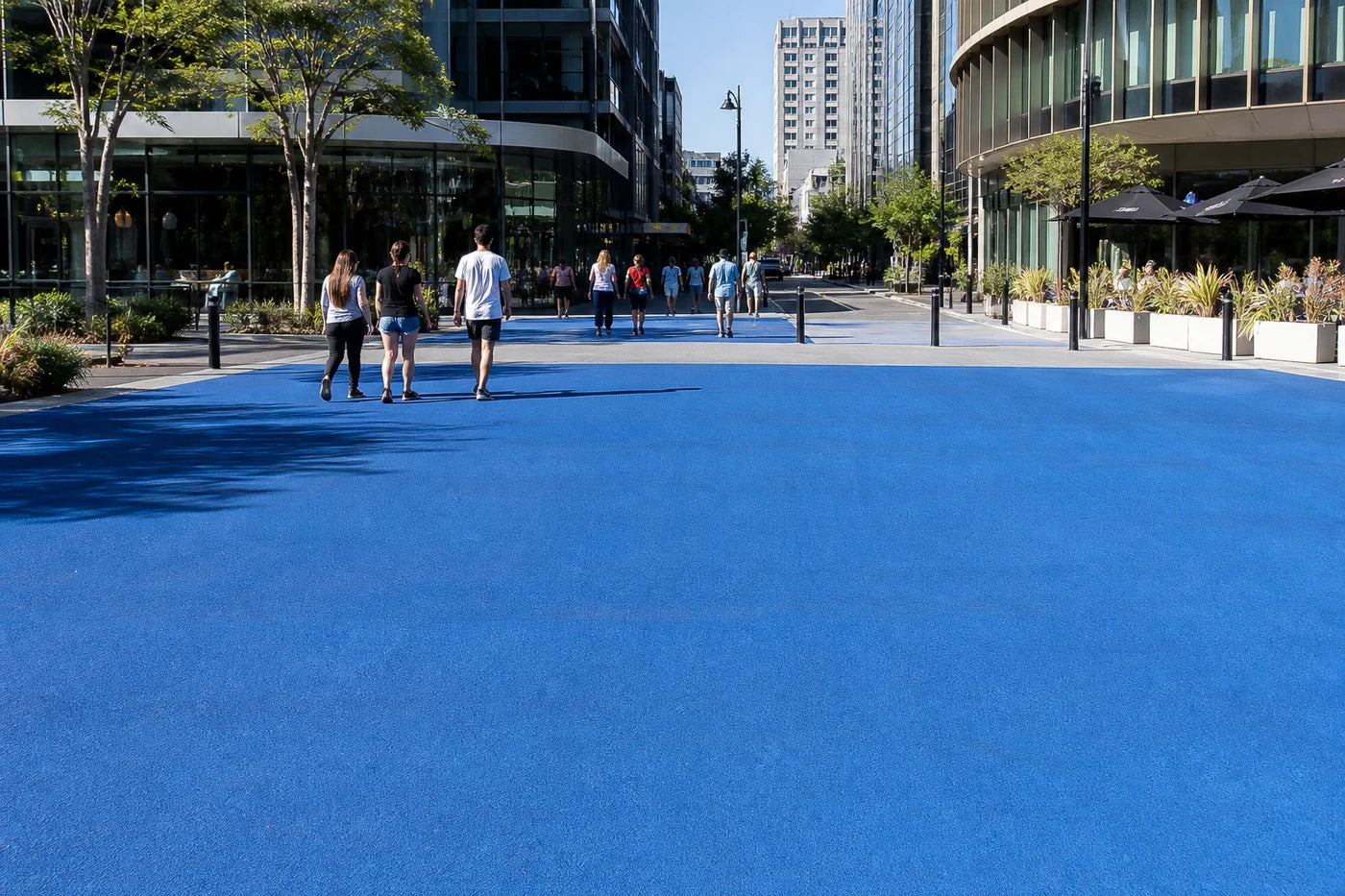
Colored anti-skid surfacing for parks and plazas combines slip-resistant performance, durable surface protection, and decorative color to create attractive, clearly defined, and functional pedestrian spaces for modern urban landscapes.
admin
Colored Anti-Skid Surfacing for Parks and Plazas
Parks and public plazas are important spaces for walking, recreation, social activities, and community events. These areas often experience continuous pedestrian traffic while being exposed to rain, moisture, sunlight, and changing weather conditions. Colored anti-skid surfacing for parks and plazas provides a practical solution that combines slip resistance, durability, and decorative design, helping create attractive and functional outdoor public spaces.
Improving Slip Resistance in Public Spaces
Outdoor pedestrian areas can become slippery when surfaces are wet or contaminated with dust, leaves, and other debris. This can be particularly important around park entrances, sloped walkways, fountains, steps, and other frequently used areas.
Anti-skid surfacing creates a textured finish that provides additional grip underfoot. Depending on the system, durable resin binders can be combined with selected aggregates to produce a high-friction surface suitable for pedestrian environments.
The level of texture can be selected according to the location, expected traffic, substrate condition, and project requirements.
Adding Color to Landscape Design
One of the biggest advantages of colored anti-skid surfacing is its ability to combine functional performance with visual design.
Instead of traditional gray concrete or black asphalt, designers can select colors that complement surrounding architecture, landscaping, street furniture, and natural environments. Earth tones can blend with landscaped parks, while brighter colors can highlight activity areas or important pedestrian routes.
Different colors can also be used to distinguish walking paths, gathering spaces, recreational zones, entrances, bicycle routes, and pedestrian crossings.
This makes colored surfacing a useful design element for landscape architects and urban planners seeking to create more distinctive public spaces.
Durable Surfacing for High Pedestrian Traffic
Popular parks and plazas may receive significant daily pedestrian traffic. Public events, maintenance vehicles, bicycles, carts, and outdoor furniture can also place additional demands on the pavement.
A properly installed colored anti-skid system provides a durable wearing surface over suitable asphalt or concrete substrates. Wear-resistant aggregates help maintain surface texture, while the binder provides adhesion and protection for the underlying pavement.
Proper surface preparation is important to achieve consistent appearance and long-term performance.
Suitable for Different Outdoor Applications
Colored anti-skid surfacing can be used across a wide variety of public environments, including urban parks, public plazas, pedestrian promenades, landscape walkways, waterfront areas, garden paths, recreational spaces, community squares, and public gathering areas.
It can also be used to create visual transitions between different zones without requiring major changes to the underlying pavement design.
Combining Safety with Attractive Design
Modern public spaces need to be both functional and visually appealing. Colored anti-skid surfacing provides an effective way to improve pavement traction while introducing color and character into landscape environments.
By combining slip resistance, decorative color, wear resistance, and flexible design options, colored anti-skid surfacing can transform ordinary pavement into an attractive part of the overall landscape. For parks and plazas, it provides a practical balance between surface performance, pedestrian comfort, and contemporary urban design.


 Highways
 Cycle Lanes
 Pedestrian Zones
 Bridges & Tunnels
 Parking
 School Zones
 Industrial
 Recreation