Application-focused colored surfacing systems engineered to improve skid resistance, traffic guidance and long-term durability across roads, bridges and public infrastructure.
Solution article
Follow the Color: Wayfinding Through Colored Pavement
Colored pavement turns the ground into an intuitive wayfinding system, using continuous color routes, anti-slip texture, and distinctive visual design to guide pedestrians through parks, plazas, cultural venues, and other public spaces.
admin
Follow the Color: Wayfinding Through Colored Pavement
Finding the right direction in parks, public plazas, commercial districts, cultural venues, and other large public spaces should feel simple and intuitive. Traditional signs are useful, but pavement itself can also become part of the navigation system. Colored pavement for wayfinding uses continuous colors, contrasting surfaces, and clearly defined routes to guide pedestrians while adding visual character to the surrounding environment.
Turning Color into Direction
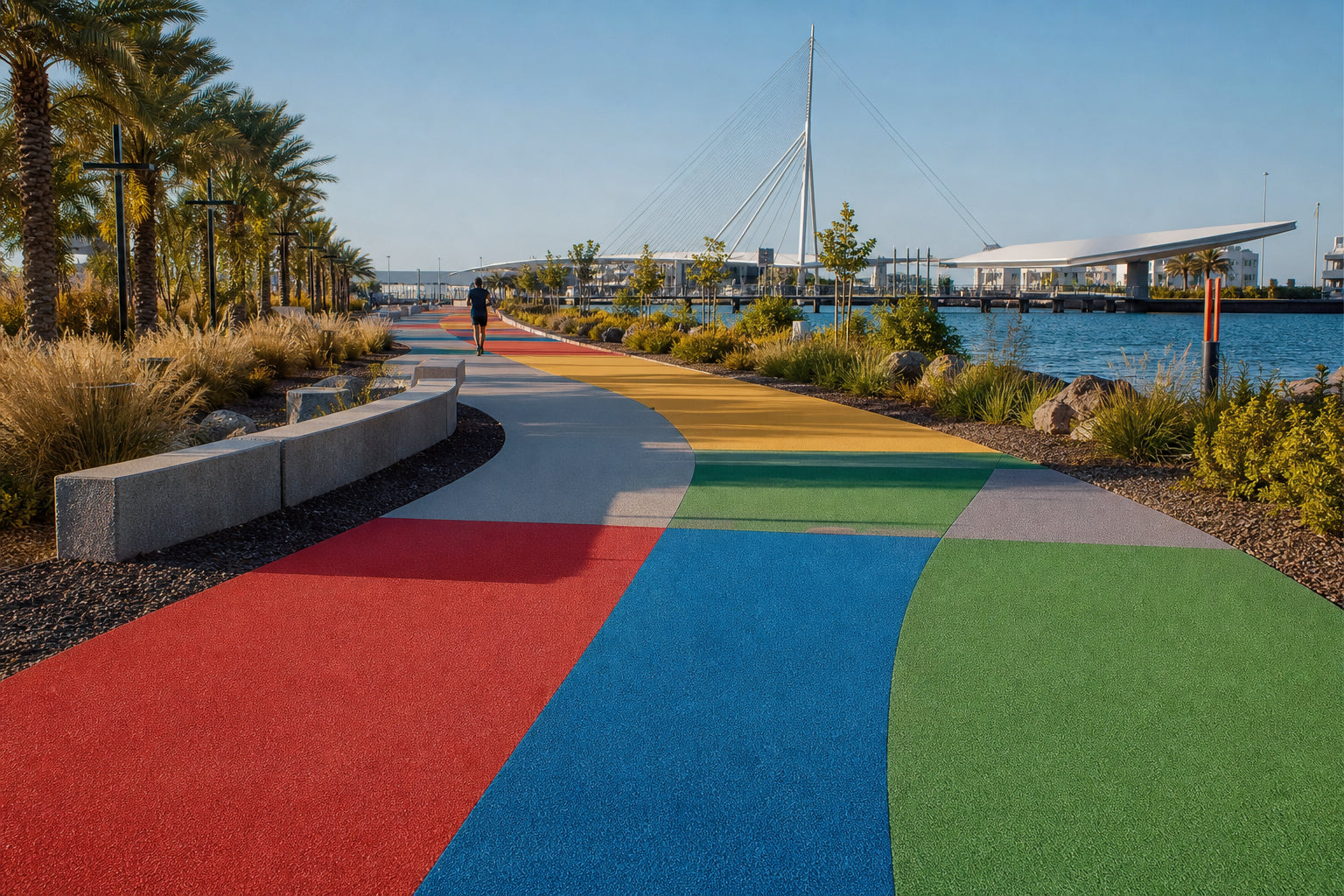
A colored route can act like a visual ribbon running through a public space. Instead of repeatedly looking for signs, visitors can follow a consistent pavement color from one destination to another.
For example, a colored pathway may connect an entrance with a plaza, museum, viewing area, transportation hub, or recreational facility. Different colors can represent different destinations or routes, creating an easy-to-understand visual system.
This approach is particularly useful in large or complex environments where multiple pedestrian routes intersect.
Creating Clearer Public Spaces
Colored pavement can help distinguish main pedestrian routes, secondary paths, gathering areas, entrances, cycling lanes, activity zones, and destination points.
Changes in color can also indicate intersections or transitions between different spaces. A continuous colored strip may guide visitors along the main route, while wider colored sections can highlight important entrances or gathering points.
Combined with directional arrows, symbols, and signs, colored pavement can become part of a complete wayfinding strategy.
Combining Wayfinding with Anti-Slip Performance
Wayfinding surfaces should provide more than visual guidance. Outdoor routes are exposed to rain, moisture, dust, leaves, and continuous pedestrian traffic.
Colored pavement can incorporate anti-slip aggregates to create a textured, high-friction finish. This provides additional traction while maintaining the strong visual contrast required for route identification.
The combination of color and anti-slip texture makes this type of surfacing suitable for both indoor-outdoor transition areas and exposed public spaces.
Adding Character Through Pavement Design
Colored wayfinding routes can also contribute to the identity of a destination. Designers can select colors that coordinate with surrounding architecture, landscaping, public art, or branding.
Curved color ribbons can create a more playful landscape, while straight geometric routes can complement contemporary architecture. Multiple colors can also be used to connect different destinations within the same site.
This makes colored pavement both a practical navigation tool and a creative landscape design element.
Where Can Colored Wayfinding Pavement Be Used?
Colored wayfinding surfacing is suitable for parks, public plazas, museums, cultural centers, tourist attractions, commercial districts, campuses, waterfronts, transportation areas, and recreational spaces.
By combining visual guidance, decorative color, anti-slip performance, and durable surface protection, colored pavement can make navigation easier while improving the appearance of public environments.
A well-designed color route does more than show people where to go—it becomes part of the experience of moving through the space.


 Highways
 Cycle Lanes
 Pedestrian Zones
 Bridges & Tunnels
 Parking
 School Zones
 Industrial
 Recreation