Application-focused colored surfacing systems engineered to improve skid resistance, traffic guidance and long-term durability across roads, bridges and public infrastructure.
Solution article
Colored Anti-Slip Surfacing for Accessible Parking Areas
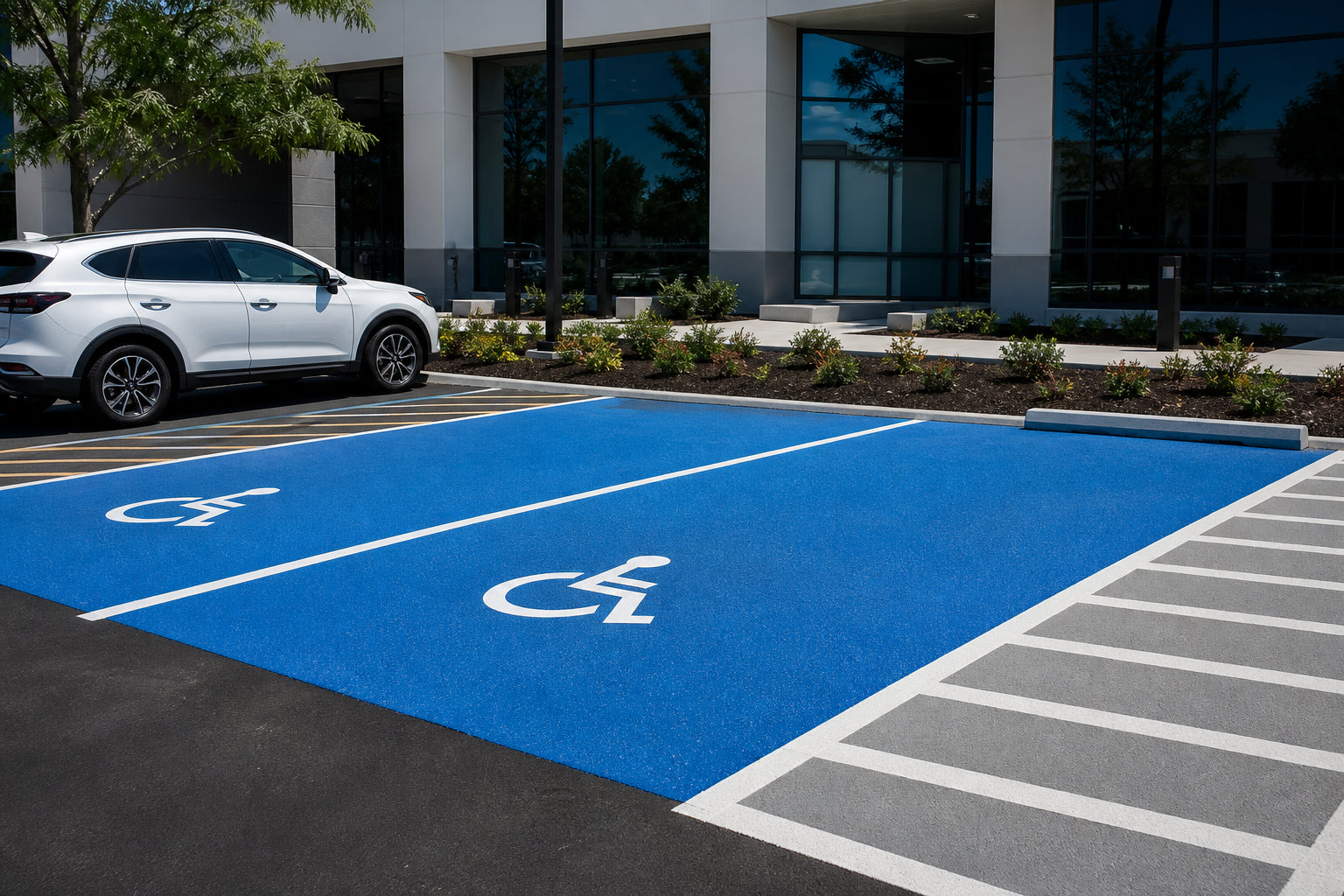
Colored anti-slip surfacing provides high visibility, reliable traction, and clear zone identification for accessible parking spaces, access aisles, pedestrian routes, and building entrance areas.
admin
Colored Anti-Slip Surfacing for Accessible Parking Areas
Accessible parking areas are an important part of shopping centers, hospitals, offices, residential developments, public facilities, and transportation hubs. These spaces need to be clearly identifiable, easy to navigate, and suitable for pedestrians moving between vehicles and nearby entrances. Colored anti-slip surfacing for accessible parking areas combines high visibility, slip-resistant texture, and durable surface performance to create clearly defined parking and access zones.
Improving Visibility with Colored Surfacing
Accessible parking spaces need to stand out clearly from surrounding parking areas. Colored surfacing provides strong visual contrast and can make designated spaces easier for drivers and pedestrians to recognize.
Blue or other specified colors can be incorporated according to local project requirements and applicable regulations. Colored surfaces can also be combined with accessibility symbols, boundary lines, directional arrows, and access aisle markings.
This creates a clear visual distinction between accessible parking spaces, access aisles, pedestrian routes, vehicle lanes, and building entrances.
Anti-Slip Performance for Pedestrian Movement
People using accessible parking areas may move between vehicles, wheelchairs, mobility devices, ramps, and pedestrian pathways. Surface traction is therefore an important consideration.
Outdoor parking areas can be affected by rain, moisture, dust, oil, and other contaminants. Anti-slip surfacing incorporates selected aggregates to create a textured, high-friction finish that provides additional grip underfoot.
The texture should be designed to balance slip resistance with a surface that remains practical for wheelchairs and other mobility devices.
Creating Clear Access Routes
Colored pavement can extend beyond individual parking spaces to help define the complete accessible route.
For example, contrasting surfacing can identify access aisles connecting parking spaces with sidewalks, ramps, crossings, and building entrances. This provides continuous visual guidance and makes different functional areas easier to distinguish.
Color can also highlight pedestrian crossing points where accessible routes intersect with vehicle traffic.
Durable Performance for Parking Facilities
Accessible parking areas are exposed to vehicle traffic, pedestrian movement, weather conditions, and regular maintenance. Surfacing materials therefore need good adhesion, abrasion resistance, and outdoor durability.
Colored anti-slip systems can be applied over properly prepared asphalt or concrete substrates, depending on the selected material and project conditions. Correct surface preparation is essential for achieving reliable adhesion and long-term performance.
Color, texture, aggregate type, and system thickness should be selected according to traffic levels, climate, substrate condition, and applicable accessibility requirements.
A Practical Solution for Accessible Parking
Colored anti-slip surfacing is suitable for accessible parking areas at hospitals, shopping centers, schools, offices, residential communities, transportation facilities, public buildings, and commercial developments.
By combining high visibility, anti-slip texture, clear zone identification, and durable surface protection, colored surfacing provides a practical solution for accessible parking environments. When designed in accordance with applicable local accessibility standards, it can help create clearly organized parking and pedestrian access areas for everyday use.


 Highways
 Cycle Lanes
 Pedestrian Zones
 Bridges & Tunnels
 Parking
 School Zones
 Industrial
 Recreation