Application-focused colored surfacing systems engineered to improve skid resistance, traffic guidance and long-term durability across roads, bridges and public infrastructure.
Solution article
Guiding the Crowd: Colored Surfacing for Pedestrian Flow
Colored surfacing helps guide pedestrian flow through busy public spaces by combining intuitive color-coded routes, clear visual zoning, anti-slip texture, and durable pavement performance.
admin
Guiding the Crowd: Colored Surfacing for Pedestrian Flow
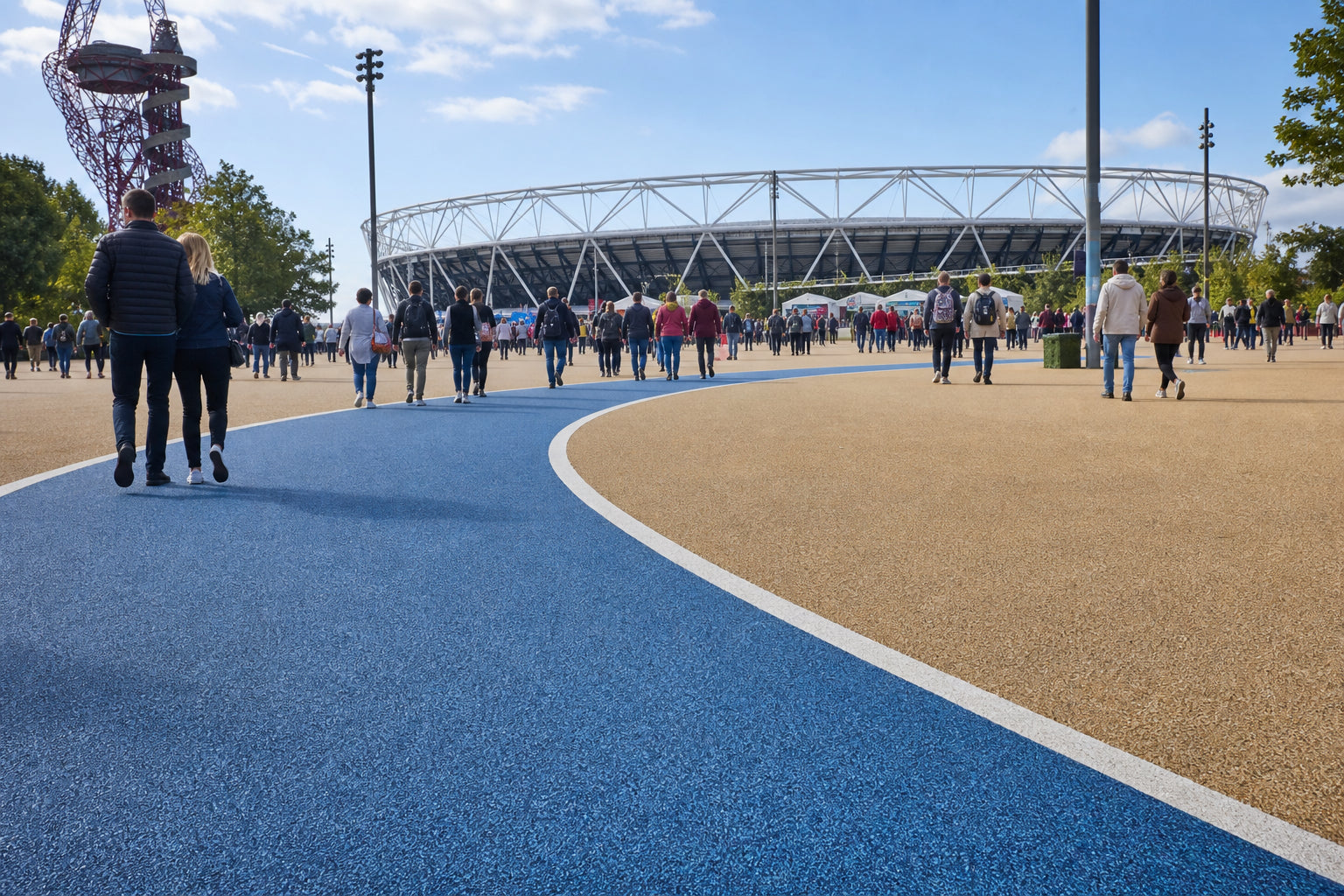
Busy pedestrian spaces need more than enough room for people to walk. Transportation hubs, public plazas, shopping districts, tourist attractions, stadium surroundings, parks, and event venues often need to guide large numbers of visitors toward entrances, exits, gathering areas, and important destinations. Colored surfacing for pedestrian flow provides a practical way to organize movement through visual guidance while adding anti-slip performance and distinctive design to public spaces.
Using Color to Guide Pedestrian Movement
Color can make pedestrian routes easier to recognize without relying entirely on signs. A continuous colored surface can visually guide people from one area to another, creating an intuitive route through complex or crowded environments.
Different colors can identify main walking routes, entrances, exits, waiting areas, gathering zones, crossings, and connections to public transport.
For example, one colored pathway might lead visitors toward an entrance while another guides them toward an exit or transportation connection. Consistent color coding can make these routes easier to follow.
Creating Clearer Routes in Busy Spaces
Crowded public environments often contain multiple movement patterns. Pedestrians may be arriving, leaving, waiting, crossing, or moving between different destinations at the same time.
Colored pavement can help visually separate these movements. Contrasting surfaces can highlight intersections or decision points, while wider colored zones can define waiting and gathering areas.
Directional arrows, pedestrian symbols, borders, and other pavement markings can also be combined with colored surfacing to strengthen the overall wayfinding system.
Combining Guidance with Anti-Slip Performance
High pedestrian traffic requires surfaces that provide dependable performance under everyday conditions. Outdoor areas may be exposed to rain, moisture, dust, leaves, and other contaminants.
Colored surfacing can incorporate selected anti-slip aggregates to create a textured, high-friction finish. This provides additional grip underfoot while maintaining the strong visual contrast needed for pedestrian guidance.
The appropriate texture should be selected according to traffic volume, accessibility needs, substrate conditions, and the surrounding environment.
Adding Design to Crowd-Flow Management
Pedestrian guidance does not need to look purely functional. Colored surfaces can become an integral part of landscape and urban design.
Curved color bands can naturally direct movement across a plaza, while geometric patterns can organize large open spaces. Colors can also coordinate with surrounding architecture, landscaping, public art, or destination branding.
This allows crowd-flow guidance to contribute to both the functionality and visual identity of a public space.
Better Movement Through Public Spaces
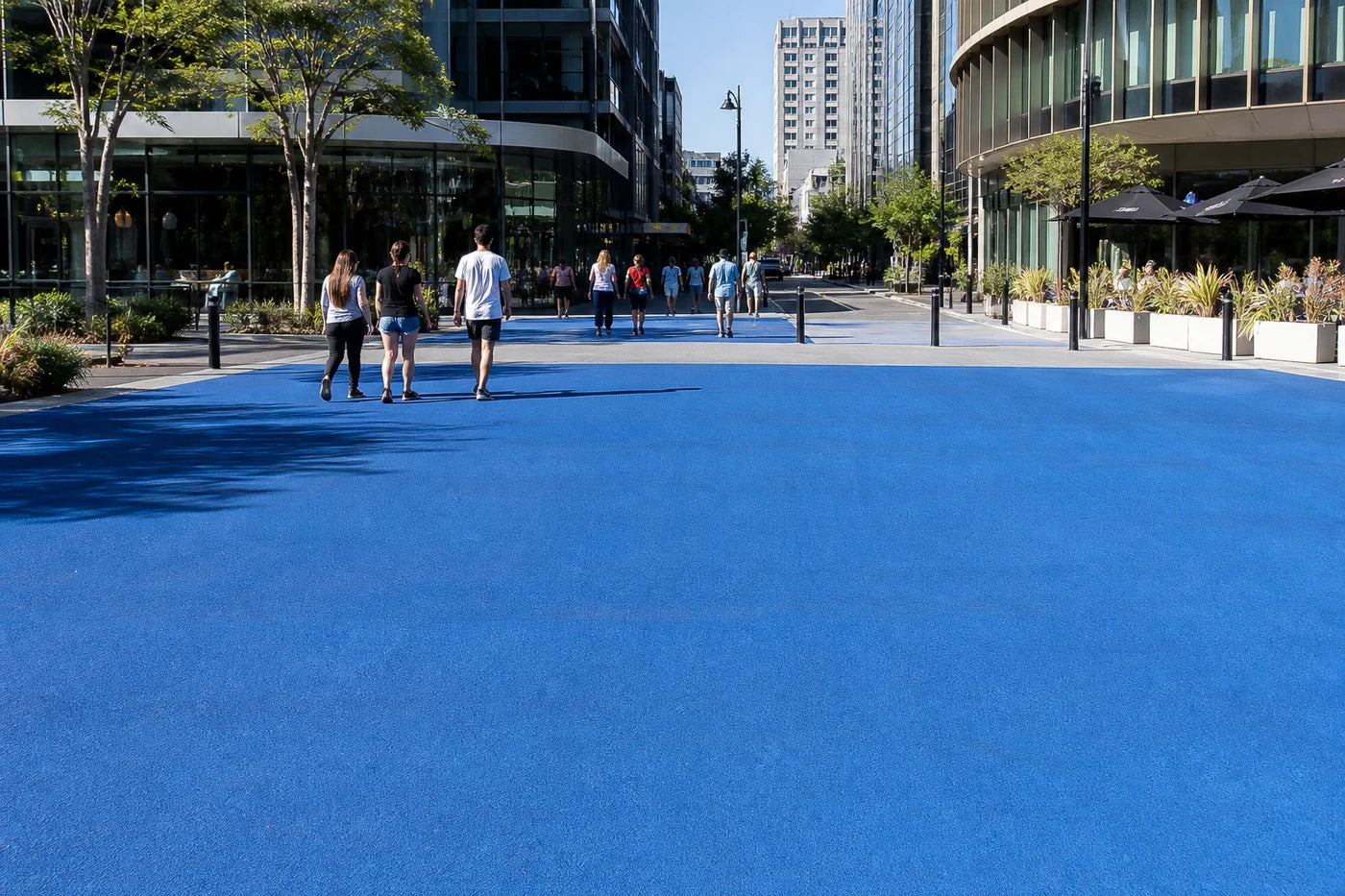
Colored pedestrian surfacing is suitable for public plazas, transportation hubs, commercial streets, tourist attractions, parks, event venues, cultural facilities, campuses, and recreational areas.
By combining visual guidance, color-coded zoning, anti-slip texture, and durable surface performance, colored surfacing can help create clearer routes through high-traffic pedestrian environments. Instead of treating pavement simply as a walking surface, designers can use color as an intuitive tool to guide movement and organize busy public spaces.


 Highways
 Cycle Lanes
 Pedestrian Zones
 Bridges & Tunnels
 Parking
 School Zones
 Industrial
 Recreation