Application-focused colored surfacing systems engineered to improve skid resistance, traffic guidance and long-term durability across roads, bridges and public infrastructure.
Solution article
Why Choose Colored Surfacing for Waterfront Promenades?
Colored surfacing helps waterfront promenades create safer, more visible, and more attractive pedestrian spaces while providing a durable surface for busy outdoor environments.
admin
Why Choose Colored Surfacing for Waterfront Promenades?
Creating Safer Waterfront Walking Areas
Waterfront promenades are popular public spaces for walking, jogging, sightseeing, and recreation. Because these areas often experience continuous pedestrian traffic and direct exposure to changing weather conditions, the choice of surface plays an important role in both safety and overall appearance.
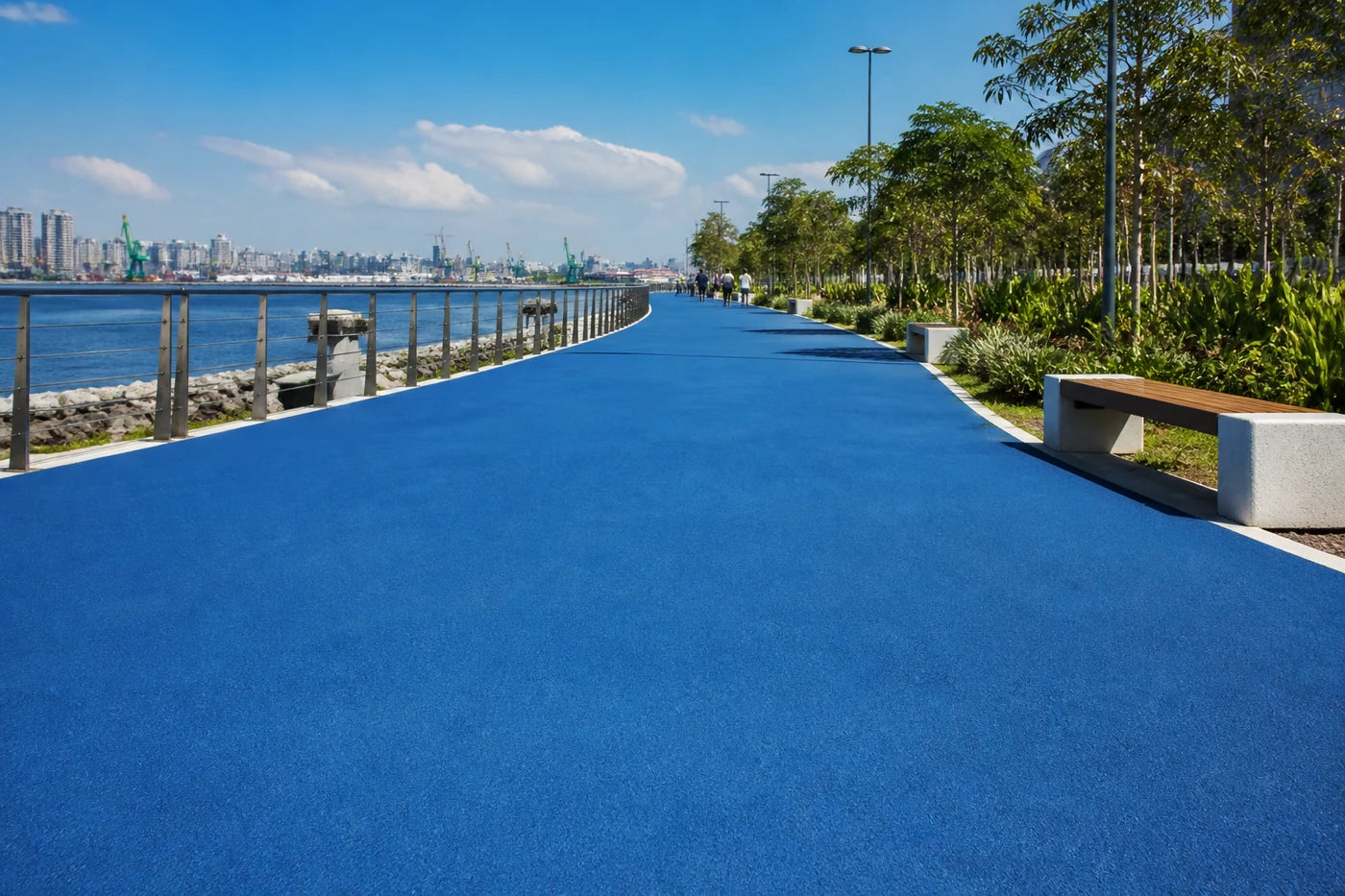
Colored surfacing for waterfront promenades provides a practical way to define pedestrian routes while creating an attractive and recognizable public space. When combined with anti-slip properties, it can also provide improved surface grip for pedestrians in areas exposed to moisture and rain.
Improved Grip Near Waterfront Environments
Waterfront paths can be exposed to rain, sea spray, humidity, and surface moisture. These conditions may make conventional surfaces more slippery, particularly around ramps, curves, entrances, viewing areas, and other frequently used sections.
A textured anti-slip surfacing system can increase surface friction and provide pedestrians with more secure footing. This is particularly useful on promenades used by people of different ages and mobility levels.
For coastal parks, riverside paths, marina walkways, and lakeside promenades, improved grip can contribute to a safer and more comfortable walking environment.
Clear Pedestrian Routes Through Color
Color provides an immediate visual distinction between different areas of a waterfront development. A blue, green, red, or other carefully selected surface can make the main pedestrian route easier to recognize and follow.
Colored pedestrian surfacing can also help separate walking areas from cycle lanes, service routes, vehicle access points, and surrounding public spaces. This visual organization is particularly useful on busy waterfronts where different users may share the same environment.
Color can additionally complement landscaping, street furniture, railings, lighting, and other design elements, helping create a more coordinated promenade.
Enhancing the Appearance of Waterfront Promenades
Waterfront areas are often designed as destinations rather than simply transportation routes. Surface color can contribute significantly to the character and visual identity of these spaces.
Instead of relying entirely on conventional grey asphalt or concrete, designers can use decorative colored surfacing to create a more distinctive pedestrian environment. Appropriate colors can complement the surrounding water, vegetation, architecture, and urban landscape.
This combination of functionality and aesthetics makes colored surfacing suitable for modern waterfront regeneration and public-realm projects.
Durable Surfacing for Outdoor Public Spaces
Waterfront promenades may experience heavy pedestrian use, bicycles, maintenance equipment, sunlight, rain, and changing temperatures. The selected surfacing system therefore needs to be suitable for demanding outdoor conditions.
High-quality colored anti-slip surfacing can provide a durable, hard-wearing finish when installed over a properly prepared substrate. Depending on the system, it can be used on asphalt, concrete, and other suitable surfaces.
Proper surface preparation and professional installation are important for achieving reliable long-term performance.
Combining Safety, Visibility and Design
Choosing colored surfacing for waterfront promenades is about more than adding color. It provides an opportunity to combine pedestrian safety, route identification, durability, and visual design within one surface solution.
From coastal walkways and marina paths to riverside parks and urban waterfront developments, colored anti-slip surfacing for waterfront promenades can help create inviting pedestrian spaces that are easier to navigate, visually distinctive, and better suited to everyday public use.


 Highways
 Cycle Lanes
 Pedestrian Zones
 Bridges & Tunnels
 Parking
 School Zones
 Industrial
 Recreation