Application-focused colored surfacing systems engineered to improve skid resistance, traffic guidance and long-term durability across roads, bridges and public infrastructure.
Solution article
Where Tactile Paving Meets Colored Pedestrian Surfacing
Tactile paving and colored pedestrian surfacing work together to create clearly defined, accessible walking routes by combining tactile guidance, visual contrast, anti-slip texture, and intuitive pedestrian wayfinding.
admin
Where Tactile Paving Meets Colored Pedestrian Surfacing
Modern pedestrian spaces need to support clear movement, accessibility, and reliable surface performance. In public plazas, transportation hubs, shopping areas, parks, campuses, and building entrances, tactile paving and colored pedestrian surfacing can work together to create clearly defined walking routes while providing visual and tactile guidance for different users.
Connecting Tactile Guidance with Colored Surfaces
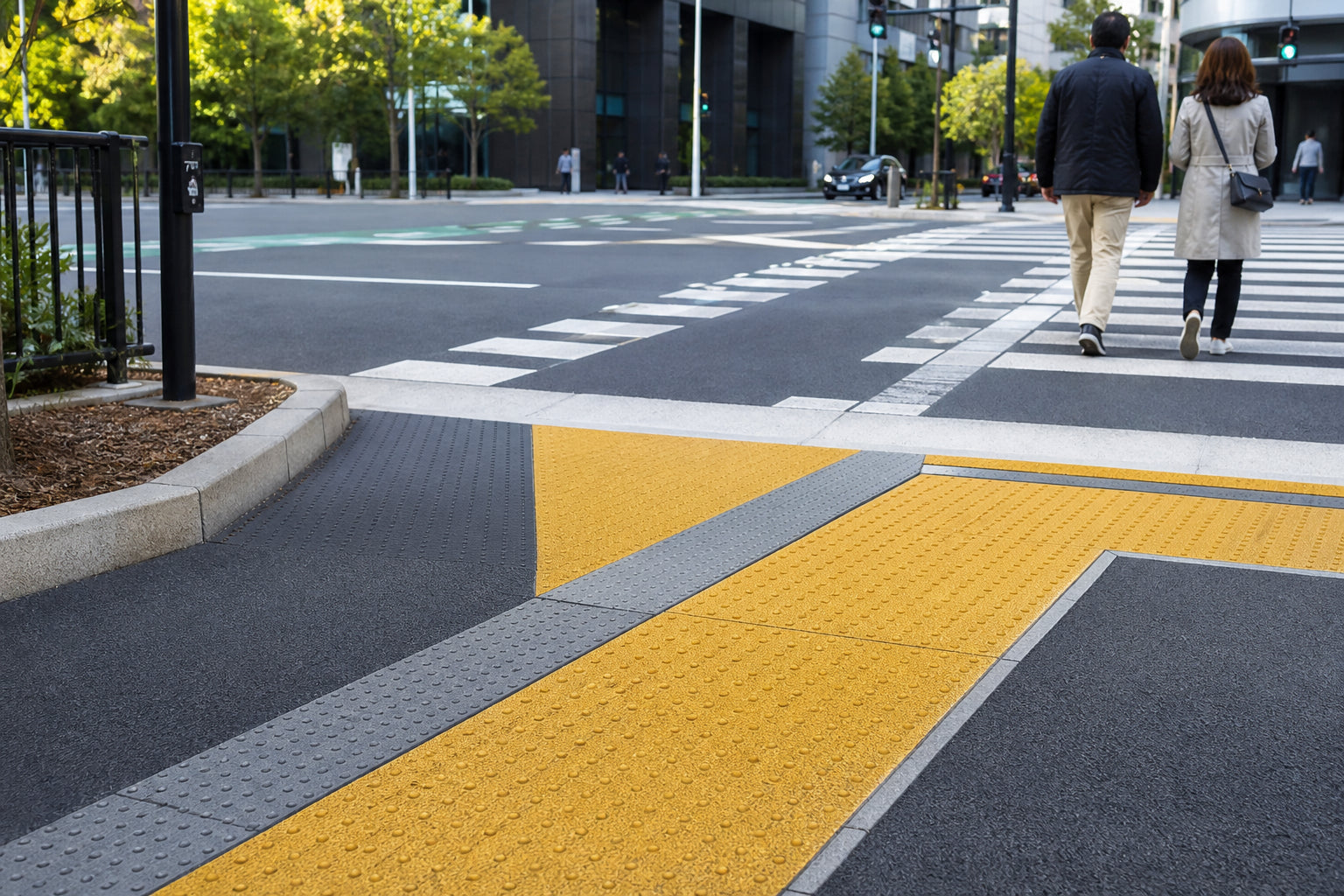
Tactile paving uses raised surface patterns to provide detectable information underfoot. It is commonly installed at locations such as crossings, platform edges, curb transitions, stairs, and other areas where tactile guidance or warning is required.
Colored pedestrian surfacing can complement these systems by visually defining the surrounding walking route. A continuous colored pathway can guide pedestrians toward a crossing or entrance, while tactile paving provides a distinct surface change at the required location.
Together, color and texture create different forms of environmental information without relying solely on signs.
Creating Clear Transition Zones
The point where ordinary pavement changes to tactile paving should be carefully designed. A clear transition helps maintain an organized pedestrian route while allowing the tactile surface to remain distinct and detectable.
Colored anti-slip surfacing can be installed around tactile paving to define pedestrian walkways, crossing approaches, curb areas, entrance routes, transit connections, and other circulation zones.
Contrasting colors may also improve visual differentiation between the tactile paving and adjacent surfaces. Color selection and contrast should follow applicable accessibility standards and local requirements.
Adding Anti-Slip Performance
Pedestrian routes are exposed to rain, moisture, dust, and continuous foot traffic. Colored surfacing can incorporate selected anti-slip aggregates to provide a textured, high-friction walking surface.
Surface texture is especially important around crossings, ramps, entrances, and other transition areas. However, the finished surface should also remain suitable for wheelchairs, mobility devices, strollers, and other users.
The surfacing system should therefore balance traction, accessibility, durability, and comfortable pedestrian movement.
Integrating Accessibility with Urban Design
Tactile paving does not need to appear disconnected from the surrounding landscape. Colored surfacing allows designers to integrate accessible routes into the broader visual identity of a project.
Colors can coordinate with architecture, landscaping, pedestrian zones, and wayfinding systems while maintaining the necessary distinction around tactile elements.
This approach is suitable for public plazas, sidewalks, transportation facilities, shopping districts, campuses, parks, cultural venues, and commercial developments.
Better Pedestrian Routes Through Color and Texture
Combining tactile paving with colored pedestrian surfacing brings together tactile guidance, visual contrast, anti-slip performance, and clear route definition.
When designed according to applicable accessibility requirements, the two surfaces can complement each other to create more intuitive pedestrian environments. The result is a clearly organized route where color supports visual wayfinding and tactile paving provides detectable information at important transition points.


 Highways
 Cycle Lanes
 Pedestrian Zones
 Bridges & Tunnels
 Parking
 School Zones
 Industrial
 Recreation