Application-focused colored surfacing systems engineered to improve skid resistance, traffic guidance and long-term durability across roads, bridges and public infrastructure.
Solution article
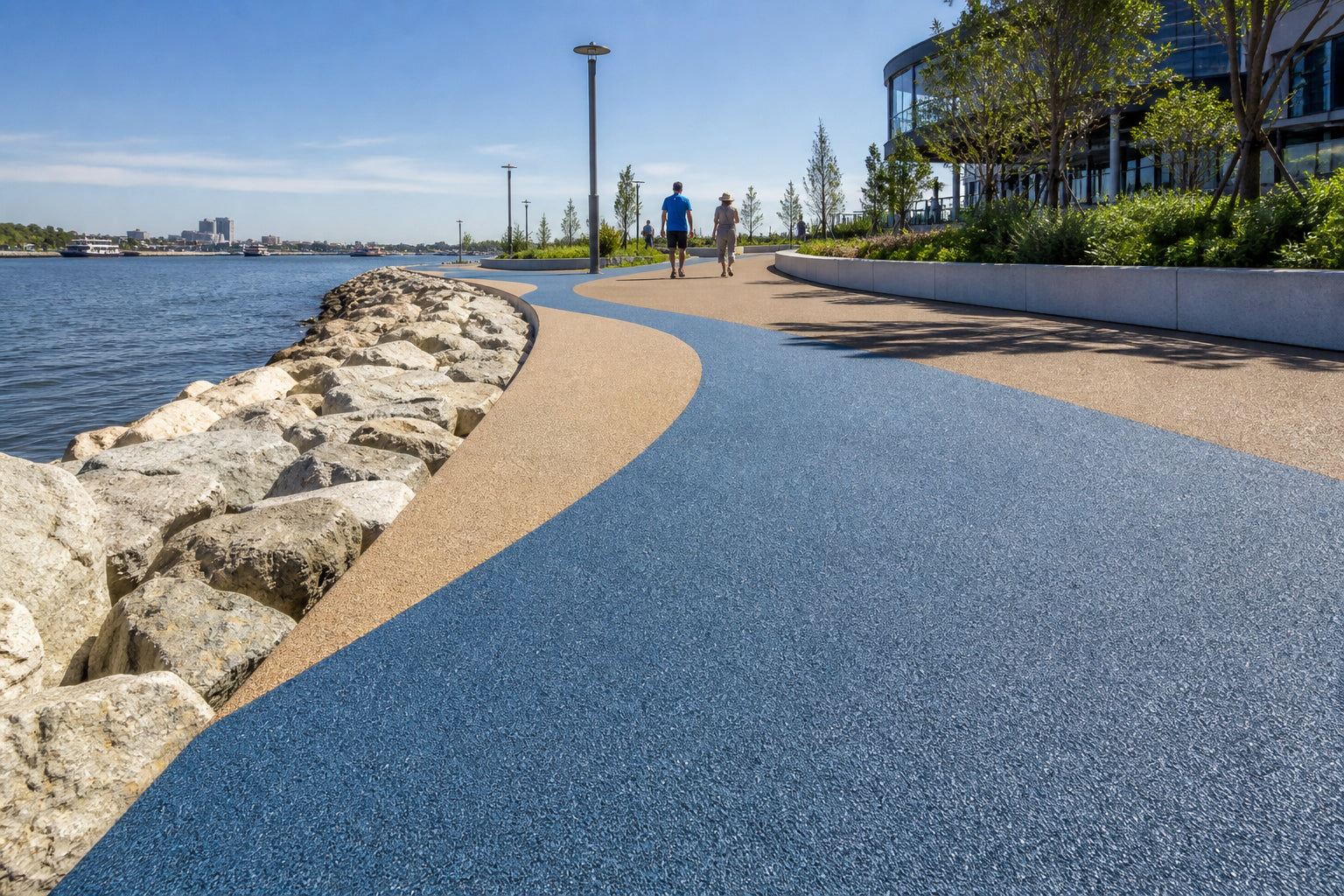
Colored Anti-Slip Surfacing for Waterfront Walkways
Colored anti-slip surfacing combines reliable traction, decorative color, visual wayfinding, and durable outdoor performance for waterfront promenades, riverside paths, marina walkways, and other high-traffic pedestrian routes.
admin
Colored Anti-Slip Surfacing for Waterfront Walkways
Waterfront walkways are popular public spaces that connect people with rivers, lakes, harbors, beaches, and urban waterfronts. These routes are often used for walking, sightseeing, recreation, and access to nearby commercial or leisure areas. Because waterfront environments are frequently exposed to moisture and changing weather conditions, pavement needs to provide both reliable traction and attractive design. Colored anti-slip surfacing for waterfront walkways combines high-friction texture, decorative color, and durable outdoor performance.
Better Traction Near the Water
Waterfront surfaces can be exposed to rain, water spray, humidity, surface runoff, and wet footwear. These conditions may affect pavement traction, particularly around ramps, slopes, viewing areas, and locations close to the water.
Anti-slip surfacing incorporates selected aggregates to create a textured, high-friction finish. This additional texture provides better grip underfoot while maintaining a comfortable walking surface for everyday pedestrian use.
For busy waterfront destinations, the appropriate surface texture can be selected according to pedestrian traffic, environmental exposure, and project requirements.
Adding Color to Waterfront Design
Colored pavement can turn an ordinary walkway into an attractive part of the surrounding landscape. Blue, beige, red, green, and natural earth tones can complement water, vegetation, architecture, and street furniture.
Designers can also combine different colors to define pedestrian routes, viewing areas, cycling connections, rest zones, gathering spaces, and recreational areas.
Decorative borders, curved patterns, and contrasting sections can add visual interest while giving the waterfront its own recognizable identity.
Clearer Routes for Pedestrians
Large waterfront developments may include multiple destinations such as restaurants, parks, viewing platforms, marinas, commercial areas, and public plazas.
Colored surfacing can provide continuous visual guidance between these locations. A consistent colored path can help visitors follow the main promenade, while contrasting pavement can highlight intersections, entrances, or important destination points.
Color can therefore serve both a decorative and wayfinding function.
Durable Performance for Outdoor Environments
Waterfront walkways may experience continuous pedestrian traffic as well as bicycles, maintenance carts, cleaning equipment, and occasional service vehicles.
A properly designed colored anti-slip system can provide a durable wearing surface over suitable asphalt or concrete substrates. Material selection should consider moisture, drainage, UV exposure, temperature changes, traffic levels, and substrate conditions.
For coastal or marine environments, compatibility with salt exposure and other site-specific conditions should also be considered.
Combining Color, Grip, and Landscape Design
Colored anti-slip surfacing is suitable for waterfront promenades, riverside paths, lakeside walkways, marina areas, coastal parks, harbor fronts, viewing routes, and recreational waterfronts.
By combining decorative color, anti-slip texture, visual wayfinding, and durable surface protection, colored surfacing can create attractive and functional waterfront walkways that complement their surroundings while supporting everyday pedestrian use.


 Highways
 Cycle Lanes
 Pedestrian Zones
 Bridges & Tunnels
 Parking
 School Zones
 Industrial
 Recreation