Application-focused colored surfacing systems engineered to improve skid resistance, traffic guidance and long-term durability across roads, bridges and public infrastructure.
Solution article
How Can Colored Surfacing Improve Pedestrian Priority Zones?
Colored anti-slip surfacing can improve pedestrian priority zones by clearly defining walking areas, enhancing surface grip, guiding movement, and creating safer, more attractive shared public spaces.
admin
How Can Colored Surfacing Improve Pedestrian Priority Zones?
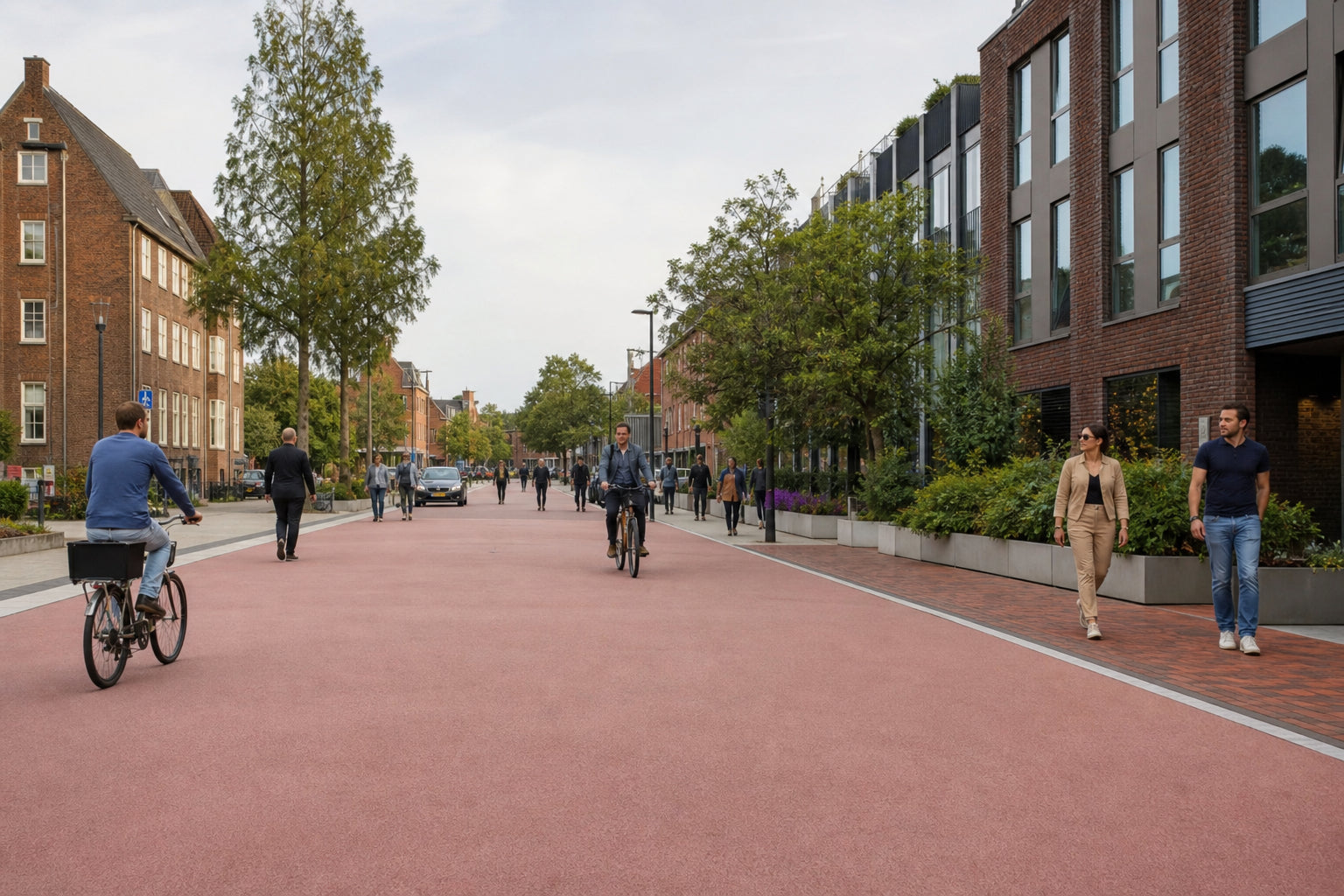
Pedestrian priority zones are designed to create safer and more comfortable spaces where people can walk, gather, and move freely. These areas are often found in city centers, shopping streets, public plazas, transport hubs, and mixed-use developments. Colored surfacing for pedestrian priority zones can help define these spaces clearly while improving visibility, safety, and overall street design.
Making Pedestrian Areas Easy to Recognize
In shared environments, pedestrians, cyclists, and vehicles may use the same general space. Without clear visual guidance, it can be difficult for users to understand which areas are intended primarily for walking.
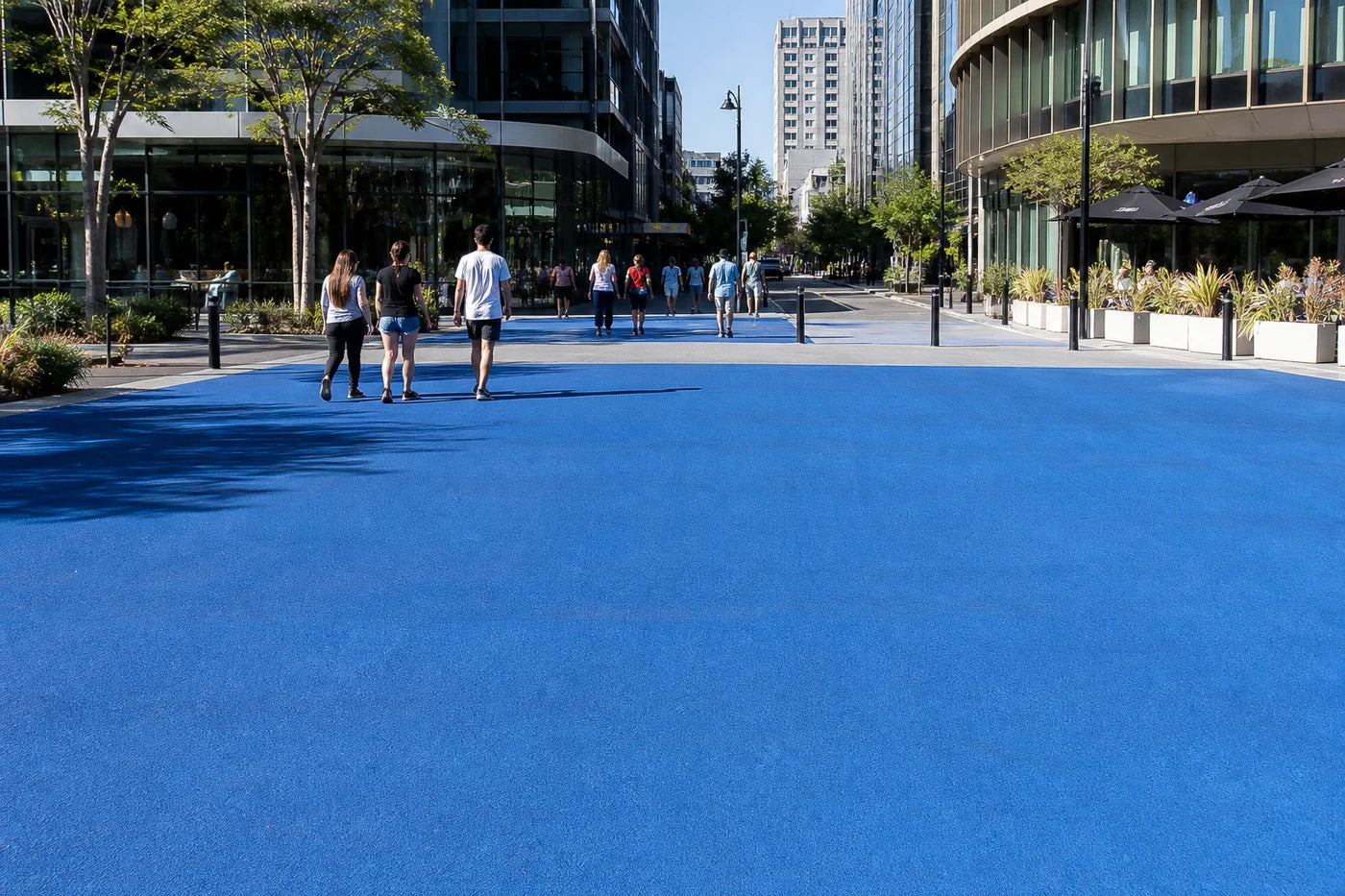
Colored surfacing provides strong visual contrast, making pedestrian priority areas easier to identify. A distinctive surface color can highlight walking routes, crossing points, entrances, and gathering spaces while separating them visually from vehicle or cycle routes.
Improving Safety with Anti-Slip Surfacing
Safety is an important consideration in busy pedestrian areas, particularly where surfaces are exposed to rain, moisture, or frequent foot traffic.
Colored anti-slip surfacing combines visual definition with a textured finish designed to enhance surface grip. This can be especially useful around crossings, ramps, turning areas, building entrances, and other locations where pedestrians and vehicles may interact.
Improved surface friction can help create a more comfortable walking environment while clearly communicating pedestrian priority.
Using Color to Guide Movement
Color can work as an intuitive wayfinding tool. Instead of relying entirely on signs and painted markings, designers can use colored surfaces to guide people naturally through public spaces.
Different colors or patterns can identify pedestrian routes, cycle lanes, vehicle access areas, and transition zones. This makes colored pedestrian surfacing particularly useful in shared-space designs where conventional kerbs and physical barriers may be limited.
The result is a streetscape that is easier to understand at a glance.
Enhancing the Character of Public Spaces
Pedestrian priority zones are not only about movement. They are also places where people shop, socialize, relax, and interact with the surrounding environment.
Colored surfaces can complement architecture, landscaping, street furniture, and other urban design elements. From subtle natural tones to more distinctive colors, surfacing can help create a recognizable identity for commercial streets, plazas, and community spaces.
Built for Busy Shared Environments
Pedestrian priority areas may experience heavy foot traffic as well as occasional bicycles, maintenance vehicles, or service traffic. A properly specified durable colored surfacing system can provide a hard-wearing finish suitable for these demanding public environments.
By combining visibility, grip, durability, and design flexibility, colored surfacing can support clearer and safer pedestrian priority zones without compromising the appearance of the surrounding streetscape.


 Highways
 Cycle Lanes
 Pedestrian Zones
 Bridges & Tunnels
 Parking
 School Zones
 Industrial
 Recreation