Application-focused colored surfacing systems engineered to improve skid resistance, traffic guidance and long-term durability across roads, bridges and public infrastructure.
Solution article
How Colored Bike Lanes Improve Road Safety?
Colored bike lanes boost road safety via prominent visual warnings for drivers and cyclists, reliable anti‑slip material performance and clear lane division, lowering traffic conflicts and slip‑related accidents for urban cycling.
admin
Growing numbers of cities are building dedicated bike lanes to support green travel, yet conflicts between bicycles and motor vehicles remain a major hidden danger on urban roads. Colored pavement has become a practical solution to tackle this problem, as it enhances road safety for cyclists mainly through visual warning, physical anti‑slip performance and standardized lane division.
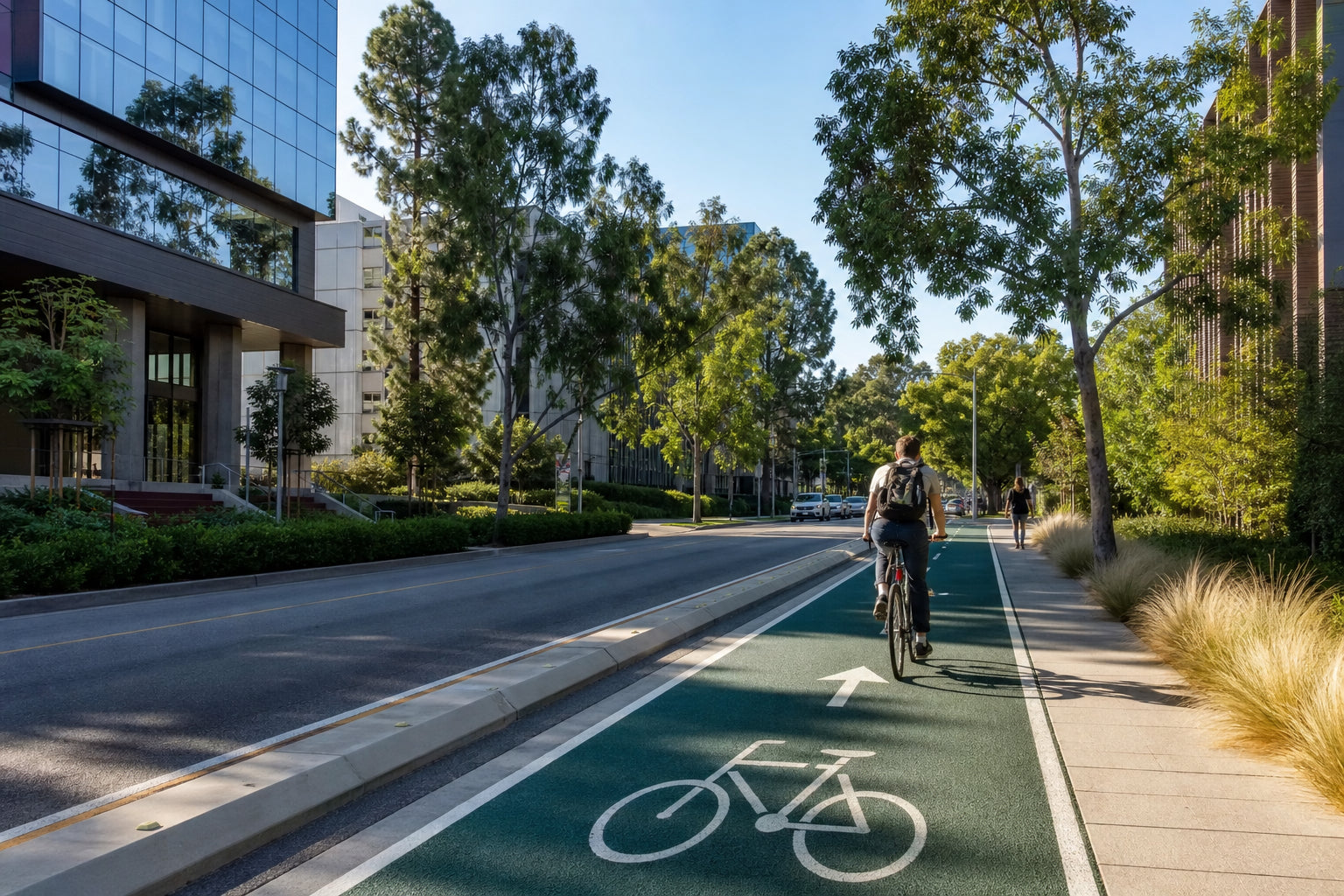
The most obvious advantage of colored bike lanes lies in visual reminder. Different from ordinary black asphalt, bright colored surfaces create strong visual contrast. Drivers can quickly recognize the exclusive cycling area and tend to slow down voluntarily, greatly reducing behaviors such as occupying bike lanes and sudden lane‑changing. For cyclists, the clear color marking helps them stay within the safe zone, especially at intersections, curve sections and road entrances where accidents easily happen. Even under dim light at dawn or dusk, colored surfacing still maintains good identifiability to lower collision risks.
Beyond visual effects, material performance directly guarantees riding safety. High‑quality colored pavement is mixed with high‑friction aggregates, delivering stable anti‑slip capability. When roads get wet after rain or snow, it effectively prevents skidding and slipping for bicycles, avoiding falls caused by slippery road surfaces. Meanwhile, qualified colored surfacing features good wear resistance and anti‑aging properties. It resists damage from long‑term vehicle rolling, rain‑snow erosion and temperature changes, reducing road defects like peeling and cracks that may trigger cycling accidents.
Colored pavement also helps standardize road space without costly large‑scale reconstruction. It divides road functions clearly without installing numerous physical guardrails. Traffic participants can quickly tell which lane belongs to bicycles, easing mixed‑traffic chaos. For old urban areas with limited road width, thin‑layer colored overlay can finish lane transformation on the original road base, realizing safety upgrading while minimizing construction disturbance to citizens.
In short, colored bike lanes improve road safety from multiple dimensions: visual warning reduces human‑caused traffic conflicts, reliable material performance avoids slip‑related accidents, and clear lane marking optimizes traffic order. It offers an economical and efficient way for cities to protect cyclists and build safer urban traffic systems.


 Highways
 Cycle Lanes
 Pedestrian Zones
 Bridges & Tunnels
 Parking
 School Zones
 Industrial
 Recreation