Application-focused colored surfacing systems engineered to improve skid resistance, traffic guidance and long-term durability across roads, bridges and public infrastructure.
Solution article
Benefits of Colored Anti‑Skid Surfaces for Bike Lanes
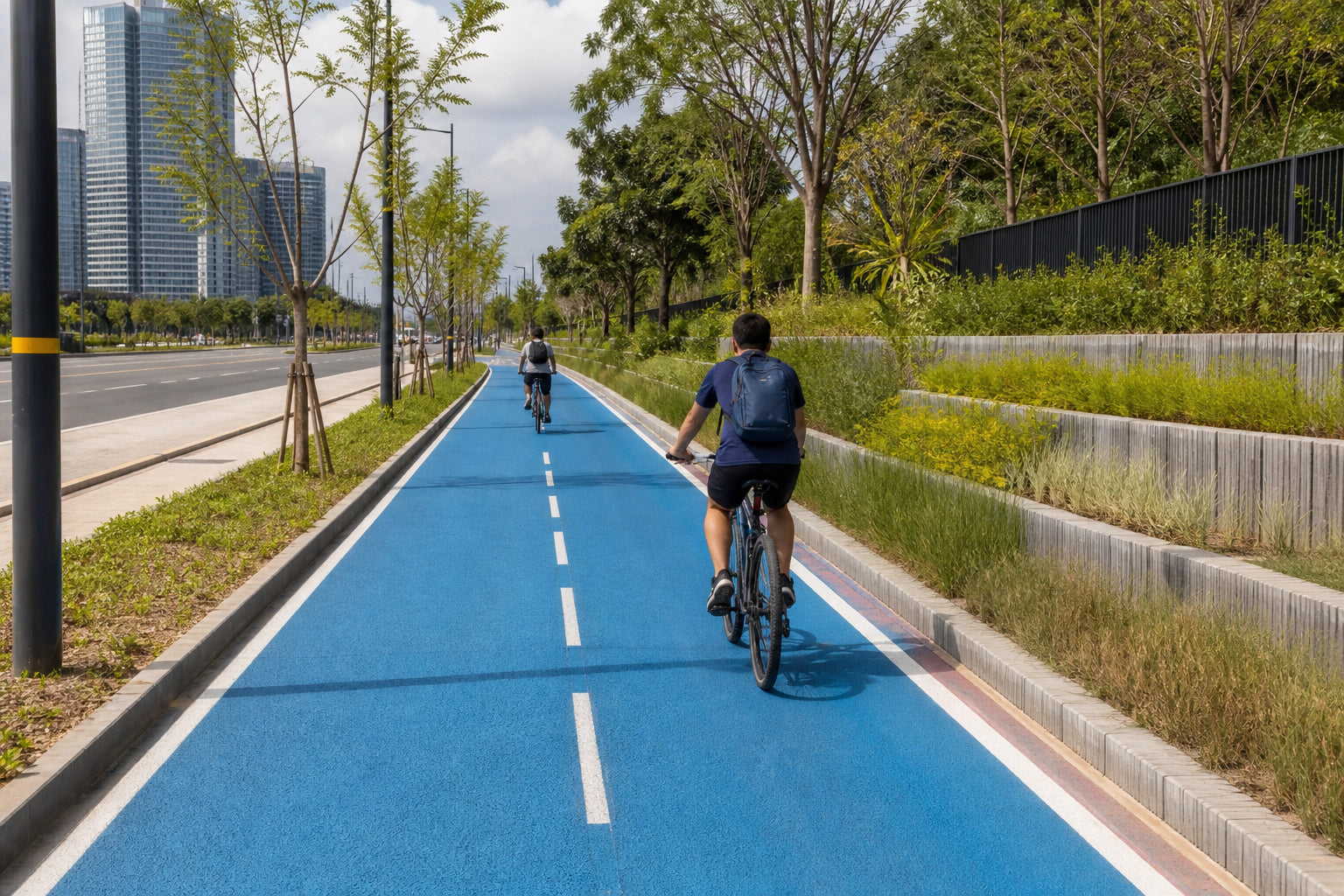
Colored anti-skid surfaces greatly improve bike lane safety through visual traffic separation and high-friction performance, optimize urban traffic order, beautify street landscapes, and provide durable, cost-effective road renovation for modern green cycling infrastructure construction.
admin
Benefits of Colored Anti-Skid Surfaces for Bike Lanes
With the rapid expansion of green transportation systems worldwide, more cities are prioritizing safe, comfortable, and eco-friendly cycling infrastructure. Among the most effective upgrades for urban road renovation is colored anti-skid pavement. Designed to combine safety functionality, visual guidance, and landscape improvement, colored anti-skid surfaces have become a standard solution for modern bike lane construction and renewal.
The most critical advantage of colored anti-skid surfacing is enhanced traffic safety. Unlike traditional black asphalt, bright and distinguishable colors form clear visual boundaries between bike lanes and motor vehicle lanes. This strong visual contrast effectively alerts drivers, reduces illegal lane occupation and reckless crossing, and minimizes traffic conflicts at intersections, curves, and road entrances. For cyclists, the dedicated colored zone provides clear psychological guidance, helping them stay within safe routes and avoid risky road areas. Equipped with high-friction aggregates, the surface maintains stable anti-slip performance even in rainy, snowy, and humid weather, greatly preventing skidding and fall accidents.
Colored anti-skid pavement also optimizes urban traffic management without complex reconstruction. Instead of relying on physical guardrails or bulky signage, color differentiation simply and efficiently classifies road functions. It separates bicycle flow from motor vehicles and pedestrian traffic, relieves mixed-traffic congestion, and improves overall road efficiency. Especially in old urban areas with narrow road conditions, the thin-layer overlay structure requires no road excavation, making lane renovation simpler, faster, and more adaptable to complex municipal environments.
Beyond safety and traffic optimization, colored bike lanes significantly enhance urban landscape quality. Uniform, elegant color tones replace monotonous black road surfaces, enrich urban street aesthetics, and create a more friendly cycling atmosphere. Comfortable and visually appealing bike environments effectively encourage residents to choose low-carbon travel, reduce vehicle emissions, and support sustainable urban development.
In terms of engineering and economic value, modern colored anti-skid materials feature weather resistance, strong wear resistance, and excellent color stability. They resist fading, cracking, peeling, and aging under long-term sunlight, temperature changes, and rainwater erosion, ensuring long-term road durability. Meanwhile, normal-temperature construction and fast-curing properties greatly shorten project cycles, reduce road closure time, and lower later maintenance costs. For municipal engineering and urban renewal projects, colored anti-skid bike lane surfaces deliver balanced value in safety, appearance, durability, and cost performance.
Overall, colored anti-skid surfacing is a practical, reliable, and city-friendly solution. It improves cycling safety, standardizes traffic order, beautifies urban roads, and supports sustainable green transportation development.


 Highways
 Cycle Lanes
 Pedestrian Zones
 Bridges & Tunnels
 Parking
 School Zones
 Industrial
 Recreation