Application-focused colored surfacing systems engineered to improve skid resistance, traffic guidance and long-term durability across roads, bridges and public infrastructure.
Solution article
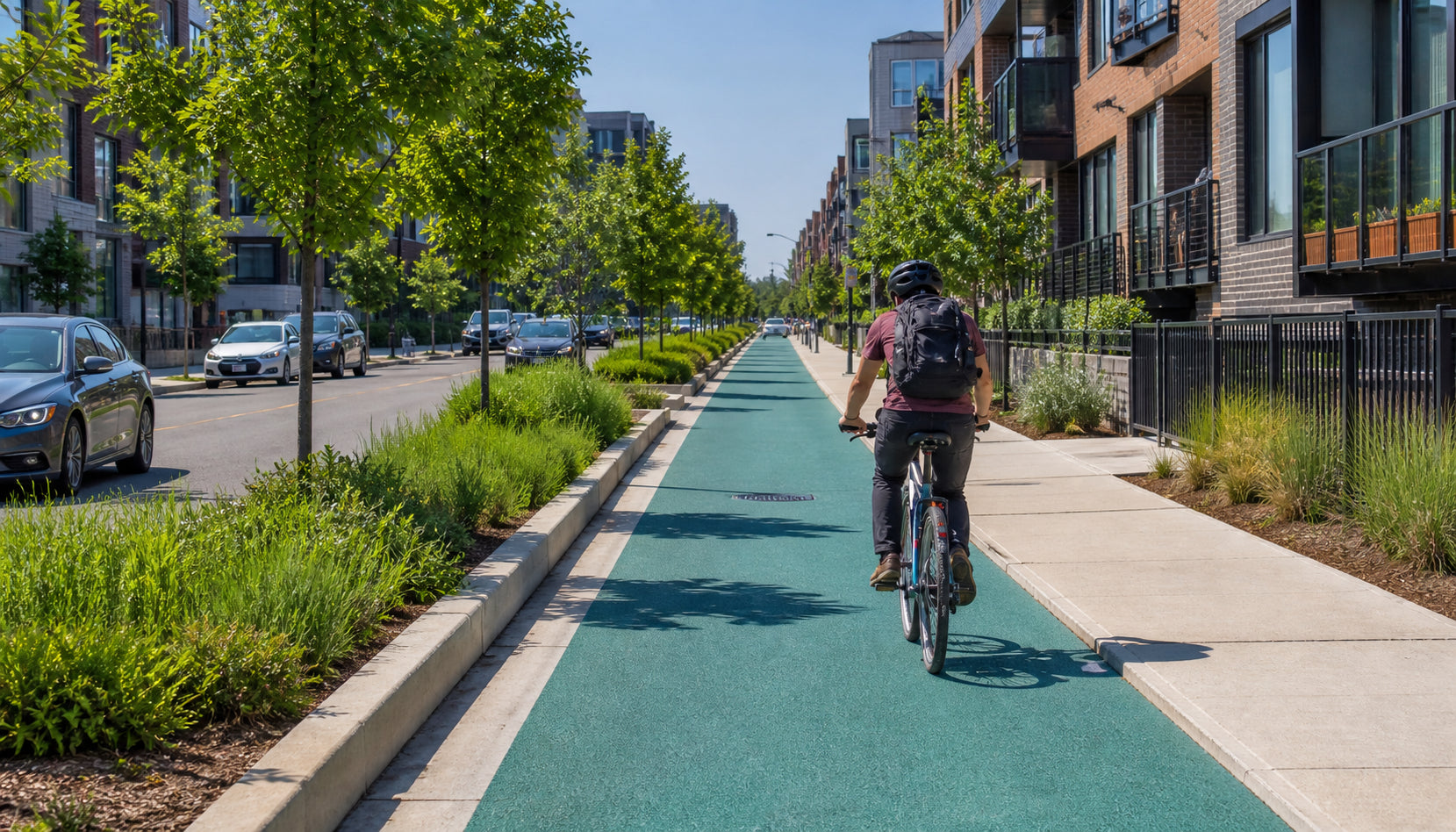
Colored Bike Lanes for Residential Streets
Colored bike lanes improve residential streets with clearer cycling routes, enhanced visibility, suitable grip, and durable surfacing for everyday neighborhood travel.
admin
Colored Bike Lanes for Residential Streets
Residential streets are increasingly being designed to support walking, cycling, and everyday neighborhood travel. Unlike major urban roads, these streets often combine homes, parked vehicles, pedestrians, driveways, and cyclists within a relatively limited space. Colored bike lanes for residential streets provide a practical way to make cycling routes more visible and create clearer separation between different road users.
Make Bike Lanes Easy to Recognize
Color gives a bicycle lane a strong visual identity. A green, red, blue, or other contrasting surface can clearly distinguish the cycling area from general traffic lanes and parking spaces.
This is particularly useful on neighborhood streets where road layouts may be simple and cyclists travel close to parked or moving vehicles. A clearly defined residential bike lane makes the intended cycling space easier to understand.
Highlight Driveways and Intersections
Residential cycling routes frequently cross driveways, side streets, pedestrian crossings, and small intersections. These locations require greater awareness because vehicles may enter or cross the bike lane.
Colored pavement can highlight these transition and conflict areas, helping maintain visual continuity along the cycling route.
Improve Grip with Anti-Slip Surfacing
Cyclists regularly brake, accelerate, and turn while navigating residential streets. Rain, leaves, dust, and other outdoor conditions can affect surface traction.
Suitable colored anti-slip surfacing can provide enhanced grip in selected areas such as bends, intersections, crossings, and approaches to junctions. The surface texture should be designed to provide appropriate friction while maintaining comfortable bicycle movement.
Support Bike-Friendly Neighborhoods
A continuous colored cycle route can connect residential areas with schools, parks, shopping streets, public transport, and wider cycling networks.
Clearly recognizable neighborhood cycling routes can also contribute to a more organized street environment and help make cycling infrastructure feel like an integrated part of the community.
Durable for Everyday Street Use
Residential bike lanes need to withstand bicycle traffic, weather exposure, road maintenance, and everyday urban conditions. Durable colored surfacing provides a practical option for both new cycling infrastructure and the renewal of existing routes.
By combining visibility, route guidance, appropriate grip, and durable performance, colored bike lanes can help create residential streets that are clearer, more attractive, and better connected for everyday cycling.


 Highways
 Cycle Lanes
 Pedestrian Zones
 Bridges & Tunnels
 Parking
 School Zones
 Industrial
 Recreation