Application-focused colored surfacing systems engineered to improve skid resistance, traffic guidance and long-term durability across roads, bridges and public infrastructure.
Solution article
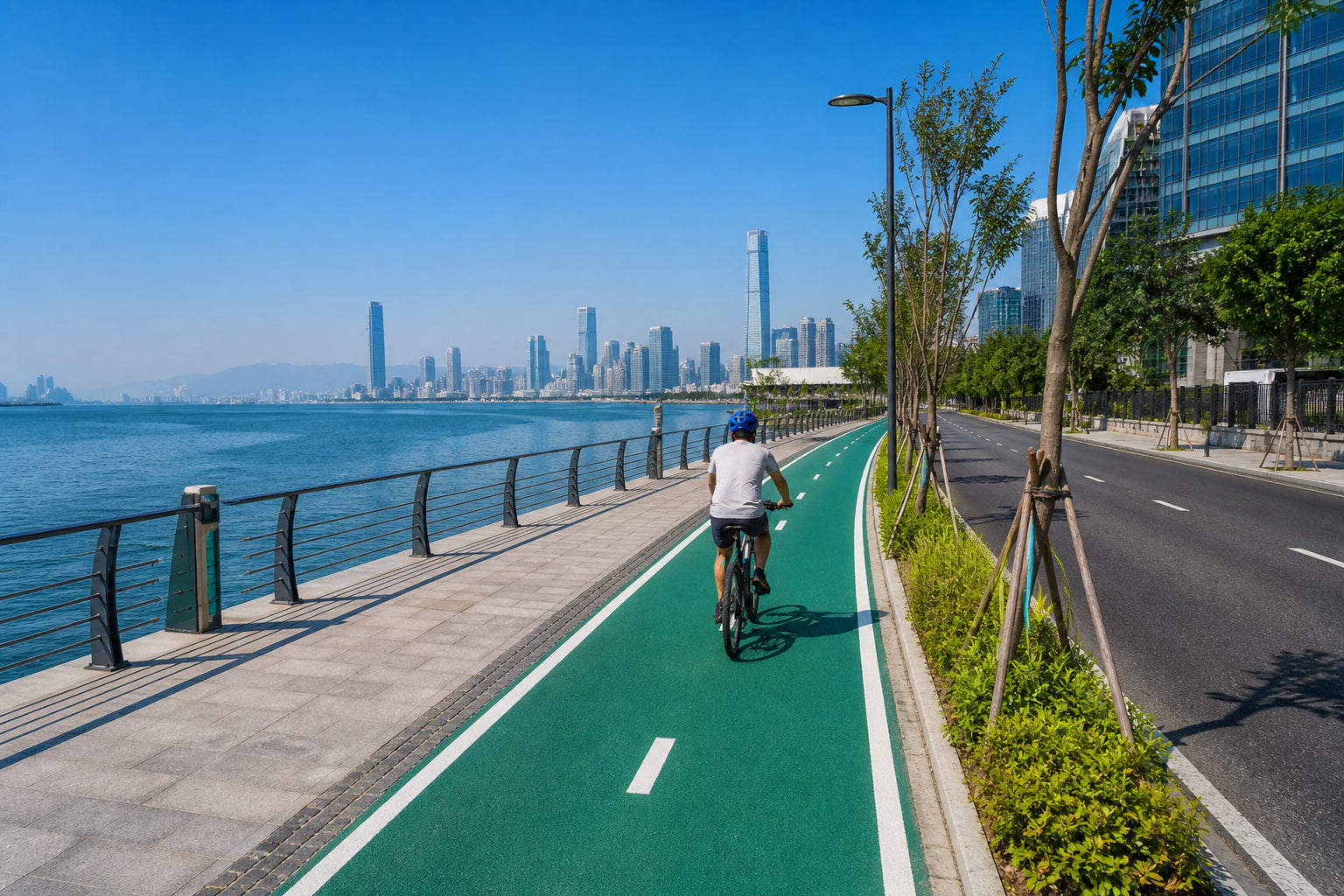
Colored Surfacing for Waterfront Walking and Cycling Paths
Colored surfacing transforms waterfront walking and cycling paths into distinctive, easy-to-follow routes that combine visual separation, enhanced grip, durability, and landscape appeal.
admin
Colored Surfacing for Waterfront Walking and Cycling Paths
A successful waterfront is more than a place to enjoy the view. It is also a space where people walk to work, cycle for exercise, meet friends, explore the city, or simply spend time outdoors. When pedestrians and cyclists share the same waterfront corridor, the design of the path can make a noticeable difference. Colored surfacing for waterfront walking and cycling paths brings clarity, character, and practical performance to these busy public spaces.
Let Color Lead the Way
Instead of relying only on signs and painted lines, color can become part of the route itself. A clearly colored cycle path instantly communicates where bicycles should travel, while a contrasting pedestrian surface creates a recognizable space for walking.
This approach is particularly effective along long promenades where routes pass through parks, viewing areas, cafés, transport connections, and recreational facilities.
Designed for Shared Waterfront Spaces
Waterfront routes often need to serve several purposes at once. Morning runners may share the area with commuters, families, tourists, and recreational cyclists later in the day.
Thoughtfully designed colored walking and cycling paths can give each user a clearer sense of space. At intersections, crossings, and shared sections, changes in color can highlight transition points and encourage greater awareness between different users.
Grip Where the Environment Demands It
Being close to water creates unique surface challenges. Rain, moisture, sand, fallen leaves, and other environmental conditions can affect outdoor paths.
A suitable colored anti-slip surfacing system adds texture and enhanced traction to locations where additional grip is required. Curves, slopes, waterfront entrances, crossings, and busy transition areas can particularly benefit from carefully selected surface treatments.
Turn Infrastructure into Landscape Design
Practical routes do not need to look purely functional. Color gives designers an opportunity to integrate walking and cycling infrastructure into the surrounding landscape.
Deep blue can reflect a coastal character, green can connect naturally with parkland, while red or warm earth tones can create strong contrast against surrounding vegetation and architecture.
The result is a waterfront path that becomes part of the visual identity of the destination rather than simply a strip of pavement.
Ready for Everyday Waterfront Life
Popular waterfront paths experience constant use as well as exposure to sunlight, rain, bicycles, pedestrians, and maintenance activities. Durable surfacing is therefore essential for maintaining both appearance and functionality.
Whether revitalizing an existing promenade or developing a new waterfront route, colored surfacing offers a flexible way to combine durability, anti-slip performance, wayfinding, and contemporary design.
A well-designed colored path does more than connect two locations—it helps create a waterfront that feels organized, active, inviting, and easy to explore.


 Highways
 Cycle Lanes
 Pedestrian Zones
 Bridges & Tunnels
 Parking
 School Zones
 Industrial
 Recreation