Application-focused colored surfacing systems engineered to improve skid resistance, traffic guidance and long-term durability across roads, bridges and public infrastructure.
Solution article
Why Cities Choose Colored Pavement for Bike Lanes?
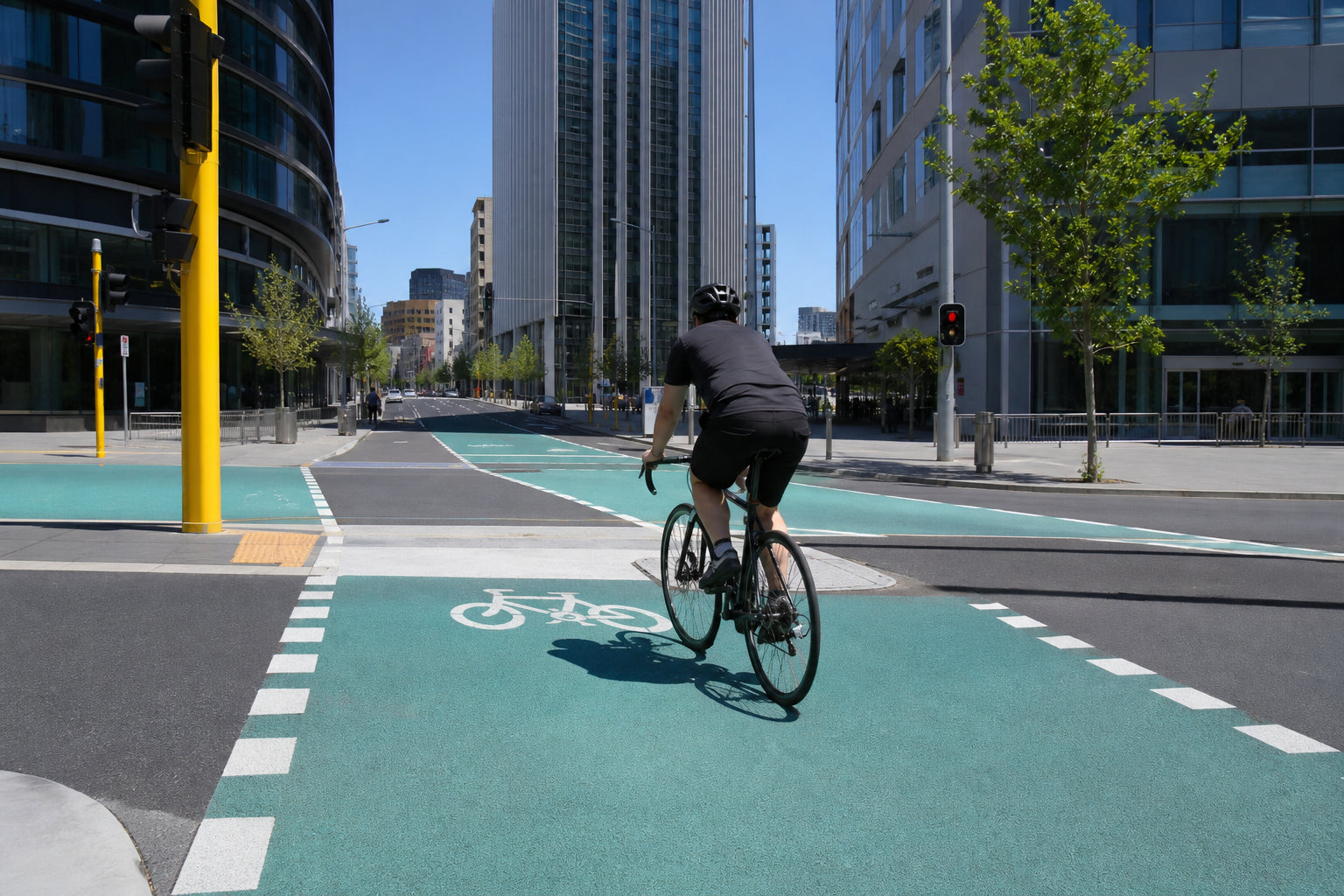
Colored pavement optimizes urban bike lane safety and traffic order with clear visual division and reliable anti-slip performance, beautifies urban road landscapes, promotes green travel, and delivers efficient construction and low maintenance costs for modern city road upgrading.
admin
With the boom of green‑travel initiatives worldwide, cities are investing heavily in safe, user‑friendly cycling infrastructure, and colored pavement has emerged as a popular choice for bike lane construction and renovation. Far more than just decorative surfacing, it delivers tangible safety, traffic‑management, aesthetic and economic benefits for municipal projects.
Safety improvement stands out as the primary driving factor. Distinct colored surfaces create sharp visual contrast against conventional black asphalt. This clear visual boundary alerts motorists to yield to cyclists and helps riders quickly locate dedicated bike zones. It effectively cuts down lane‑intrusion incidents and collision risks at intersections, bends and road junctions. Most high‑grade colored pavement also incorporates anti‑slip aggregates, maintaining stable friction on wet or rainy days to prevent skidding for two‑wheel traffic.
Colored pavement also supports efficient urban traffic organization. Without building extra physical barriers, different hues can mark regular bike lanes, priority sections and high‑risk conflict zones. It separates bicycles from motor vehicles and pedestrians, eases mixed‑traffic chaos and improves overall road throughput. For old downtown districts with narrow existing roads, thin‑layer colored surfacing avoids large‑scale road reconstruction, making retrofitting much more feasible.
Beyond practical functions, colored pavement upgrades urban public landscapes. Monotonous black asphalt makes city roadways look plain, while colorful bike lanes brighten street scenes and enrich urban visual features. Pleasant cycling environments encourage more citizens to ride bicycles, lowering vehicle exhaust emissions and advancing low‑carbon city development.
From an engineering perspective, modern colored pavement can be overlaid directly onto existing asphalt or concrete. Normal‑temperature curing reduces unpleasant odors and harmful volatile substances. Fast‑setting properties shorten construction periods, limit road‑closure‑caused traffic chaos, and lower long‑term maintenance costs. Balancing safety, usability, landscape value and cost performance, colored pavement has become a practical solution for building cycling‑oriented modern cities.


 Highways
 Cycle Lanes
 Pedestrian Zones
 Bridges & Tunnels
 Parking
 School Zones
 Industrial
 Recreation