Application-focused colored surfacing systems engineered to improve skid resistance, traffic guidance and long-term durability across roads, bridges and public infrastructure.
Solution article
How Can Colored Anti-Slip Surfacing Improve Bicycle Crossings at City Intersections?
Colored anti-slip surfacing improves bicycle crossings at city intersections by increasing visibility, highlighting conflict areas, enhancing grip, and creating clearer, continuous cycling routes.
admin
How Can Colored Anti-Slip Surfacing Improve Bicycle Crossings at City Intersections?
City intersections are critical points in any urban cycling network. Cyclists, pedestrians, cars, buses, and turning vehicles may all share or cross the same space, making clear road design essential. Colored anti-slip surfacing for bicycle crossings provides a practical way to increase visibility, define cycling routes, and improve surface grip at busy intersections.
Make Bike Crossings Easier to Recognize
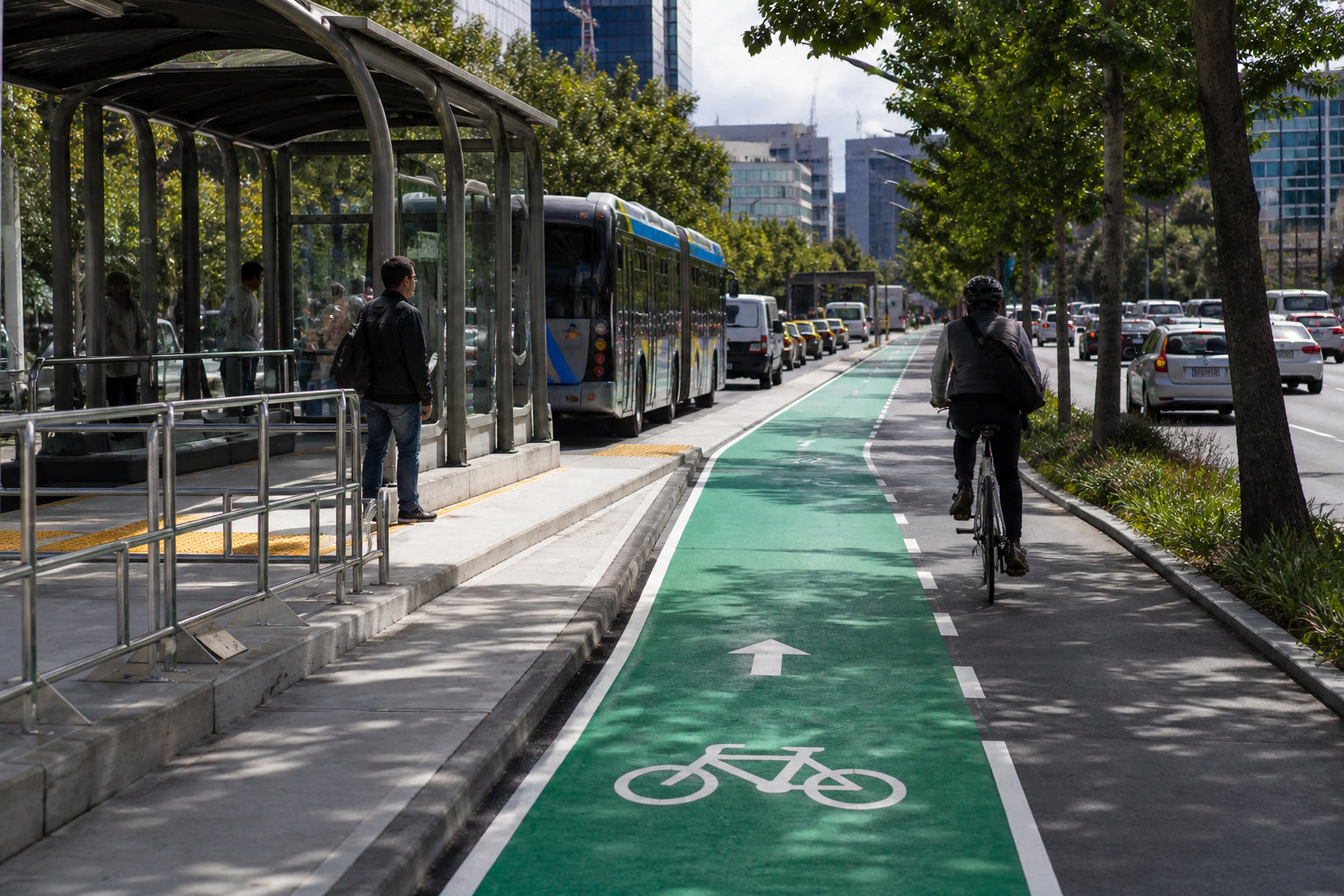
A bicycle lane can become less obvious when it reaches a large intersection. Colored pavement creates strong contrast with surrounding asphalt, allowing the cycling route to remain visually clear as it passes through the junction.
In particular, green-colored pavement is commonly associated with bicycle facilities in the United States and can be used to emphasize bike lanes and their extensions through intersections.
Highlight Potential Conflict Areas
Turning vehicles are one of the main considerations when designing bicycle crossings at intersections. Drivers may need to cross a bike lane to enter a turning lane or complete a turn.
Colored bicycle crossing surfacing can visually highlight these conflict points, drawing greater attention to areas where cyclists and vehicles may interact. When combined with appropriate road markings, signs, and signals, it contributes to a clearer intersection layout.
Improve Grip for Cyclists
Cyclists often brake, accelerate, turn, or change direction when approaching and passing through an intersection. Surface traction is therefore particularly important.
A suitable anti-slip or high-friction colored surface can provide enhanced grip in selected areas. This can be especially useful where bicycle crossings experience frequent braking, turning movements, or wet-weather conditions.
Create Continuous Cycling Routes
Good bicycle infrastructure should remain easy to follow from one side of an intersection to the other. Colored pavement can visually extend the bike lane through the crossing, creating a continuous and recognizable route.
This continuity can also support wider urban wayfinding, helping cyclists identify how the cycling network continues beyond complex junctions.
Durable Surfacing for Urban Bike Lanes
City intersections experience heavy traffic, frequent turning movements, weather exposure, and regular maintenance activities. Durable colored pavement needs to maintain both its surface performance and visual definition under demanding conditions.
By combining high visibility, enhanced grip, clear route guidance, and durable performance, colored anti-slip surfacing can make bicycle crossings a more distinctive and functional part of modern city cycling infrastructure.


 Highways
 Cycle Lanes
 Pedestrian Zones
 Bridges & Tunnels
 Parking
 School Zones
 Industrial
 Recreation